
“It’s not about money. It’s about the people you have, and how you’re led.”
— Steve Jobs
A manager’s responsibility is not simply to get work done. It is also to bring out the best in the people who make that work possible. This is where People Management becomes essential.
Every organization has individuals with different personalities, abilities, expectations, and ways of working. A good manager understands these differences and creates an environment where people can contribute effectively.
People Management is therefore more than assigning tasks and monitoring performance. It involves understanding people, building relationships, communicating effectively, encouraging participation, showing empathy, using technology wisely, and keeping employees engaged.
In today’s modern business environment, effective people management is influenced by both human behaviour and technology. Managers who develop strong people management skills can build productive, motivated, and cohesive teams.
Managers who develop strong people management skills can build productive, motivated, and cohesive teams. Organizations can also support this development through structured corporate training and leadership development programmes designed around actual workplace needs.

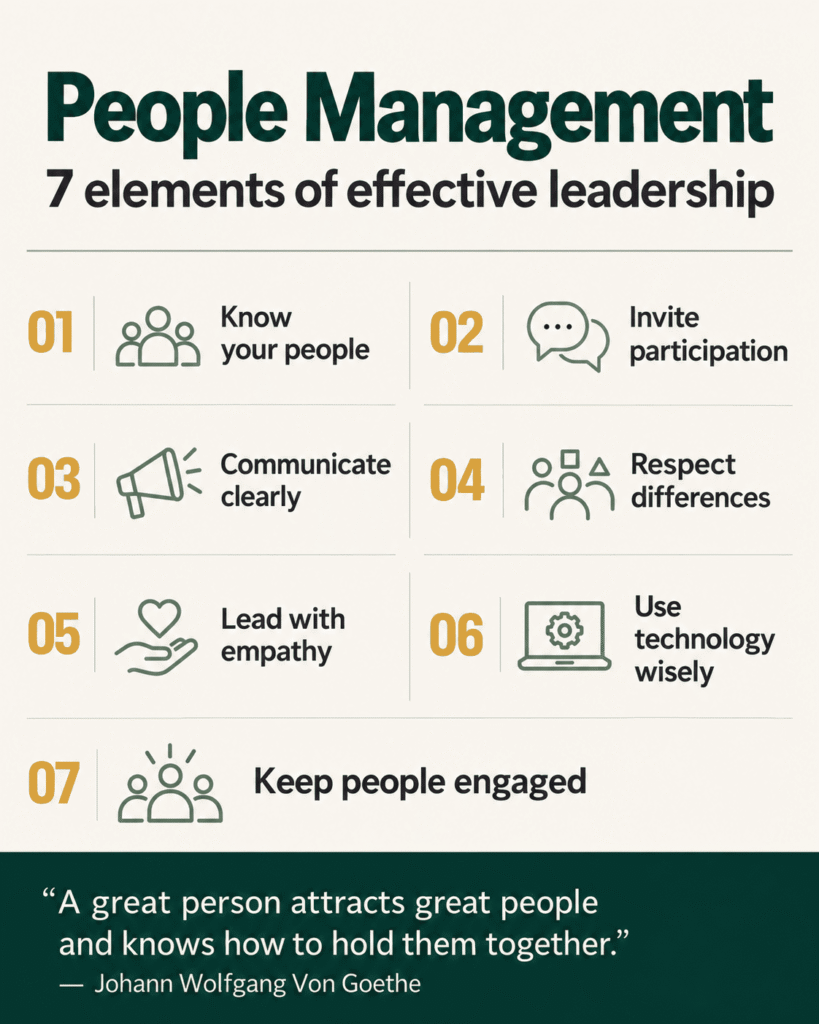
Here are 7 key elements of effective People Management that every manager should understand and practice.
1. Know the Personalities of Your Team Members
Every individual is different. Personality is a combination of various traits, and no two people are exactly the same.
Understanding the personalities of team members can help managers make better decisions about role allocation, communication, motivation, recognition, and team building.
For practical people management, team members can broadly be understood through four personality types:
Director
A Director is goal-oriented, confident, willing to take risks, and comfortable dealing with challenging situations. Such individuals are often motivated by difficult tasks, achievement, and recognition.
Giving a Director challenging responsibilities and recognizing their achievements can encourage them to perform at their best.
Socializer
A Socializer enjoys interacting with people and building relationships. They can be effective in roles that require communication, networking, influencing others, and gaining support from stakeholders.
Their natural ability to connect with people can make them valuable contributors to team relationships and collaboration.
Thinker
A Thinker prefers logical analysis, detailed preparation, and intellectual problem-solving. They often pay close attention to details and like to be well prepared before meetings, events, or important decisions.
Analytical and intellectual responsibilities can therefore be suitable for this personality type.
Supporter
A Supporter is generally focused, organized, conscientious, and task-oriented. They value team goals and contribute consistently toward the team’s progress.
Understanding this personality can help managers create roles that make good use of the individual’s strengths.
When managers understand these personality differences, they can improve job allocation, communication, recognition, motivation, and productivity while maintaining positive team energy.
2. Practice Participative Leadership
People want to feel valued and heard.
Participative leadership gives team members the opportunity to express their opinions, contribute ideas, and participate in decisions that affect their work.
Instead of making every decision alone, managers can encourage team members to share their perspectives. This creates a stronger sense of belonging and develops a feeling of “We” rather than “I.”
The CIPD’s guidance on employee voice also explains why giving employees opportunities to express their views can strengthen organizational decision-making and trust.
When employees feel that their ideas matter, they are more likely to participate actively and contribute to the team’s goals.
3. Build Effective Communication
Effective communication is one of the most important people management skills.
Open communication and regular information sharing can help managers identify concerns before they become major problems. It also helps team members understand their responsibilities, expectations, and common goals.
Good communication can:
- Reduce misunderstandings
- Address grievances at an early stage
- Build trust within the team
- Improve collaboration
- Create clarity around team goals
- Strengthen relationships between managers and employees
Managers can strengthen these abilities through focused leadership and workplace communication training that connects learning with everyday managerial situations.
When communication is open and consistent, teams are more likely to remain connected and focused on their shared objectives.
4. Respect Individual Differences
Respect is a fundamental element of effective People Management.
Every employee has different experiences, abilities, opinions, and ways of approaching work. A manager should recognize these individual differences rather than expecting everyone to behave or perform in exactly the same way.
Respect can be demonstrated through:
- Fair and unbiased behaviour
- Recognizing achievements
- Listening to employees
- Providing guidance
- Offering mentoring when needed
- Supporting employees when they face difficulties
- Practicing what you expect from others
This approach reflects the broader principle of workplace inclusion, where employees are respected for their individual backgrounds, experiences, perspectives, and abilities. The CIPD’s inclusion and diversity guidance provides additional insight into building fair and inclusive workplaces.
A manager who respects team members creates an environment where employees feel valued and supported.
5. Develop Empathy in Leadership
Empathy is another important part of effective people management.
Professional and social lives often overlap, and people naturally seek understanding, support, and meaningful relationships. Managers therefore need to be sensitive to the experiences and emotions of the people they work with.
An empathetic manager listens, understands, and responds appropriately when employees face challenges.

Empathy can help:
- Strengthen workplace relationships
- Build mutual support
- Reduce emotional stress
- Improve trust
- Create a supportive work environment
The Center for Creative Leadership also identifies empathy as an important leadership capability that can help managers understand different perspectives and build stronger working relationships.
Being sensitive to the experiences of others can help managers support their teams through the challenges of professional and personal life.
6. Use Technology Effectively
Technology has become an important part of modern workplaces.
Managers can use digital technology to assist, facilitate, and monitor aspects of workforce performance. Technology can also reduce time spent on repetitive or mundane activities.
When routine tasks are supported by technology, managers can devote more time to the human side of management—such as communication, coaching, mentoring, problem-solving, and relationship building.
Therefore, technology should not replace human skills. Instead, it should support managers in using their human skills more effectively. Organizations planning managerial development can connect with The Elvorein Group to explore programmes aligned with their workforce requirements.
7. Keep Employees Engaged
Employee engagement is essential for building an energetic and productive team.
One way managers can encourage engagement is by creating a better match between employees’ interests and their responsibilities. Managers can also remain connected with team members, encourage enthusiasm, and create opportunities for positive team interactions.
Effective employee engagement can involve:
- Understanding employee interests
- Matching people with suitable responsibilities
- Staying connected with team members
- Encouraging enthusiasm
- Creating positive team experiences
- Building a sense of belonging
According to Gallup’s workplace research, meaningful feedback and regular conversations between managers and employees play an important role in improving workplace engagement.
When employees feel connected to their work and team, they are more likely to participate actively and contribute toward organizational goals.
The Role of People Skills in Effective Management
The seven elements discussed above show that effective People Management requires more than technical knowledge.
People skills can be challenging to develop and practice. Managers need to continuously work on qualities such as patience, honesty, sensitivity, empathy, emotional intelligence, creative intelligence, and other soft skills.
When managers learn to use these people skills effectively, they can become powerful change-makers within their organizations.
Strong people management skills can help managers move beyond simply managing tasks and become transformational leaders who inspire, support, and bring out the best in their teams.
Conclusion
People Management is at the heart of effective leadership.
A successful manager does not simply focus on completing tasks. They understand the people behind those tasks, recognize individual differences, encourage participation, communicate openly, show respect and empathy, use technology effectively, and keep employees engaged.
The seven key elements of effective people management are:
- Know the personalities of your team members
- Practice participative leadership
- Build effective communication
- Respect individual differences
- Develop empathy in leadership
- Use technology effectively
- Keep employees engaged
When managers consistently practice these principles, they can create stronger teams, improve workplace relationships, encourage productivity, and become more effective leaders.
Ultimately, great people management is about understanding people, bringing out their strengths, and creating an environment where individuals and teams can grow together.
“A great person attracts great people and knows how to hold them together.”
— Johann Wolfgang Von Goethe