Employee Mental Health at Work: 12 Practical Ways to Support Your Team
Supporting employee mental health at work starts with listening, understanding and open conversations.
“What we achieve inwardly will change outer reality.” Plutarch
Employee mental health at work is shaped by everyday experiences: the workload people carry, how managers communicate, whether expectations are clear and what happens when someone asks for help. A supportive workplace pays attention to these experiences and makes changes when working conditions create unnecessary strain.
Awareness sessions can start useful conversations. Lasting progress, however, depends on what employees experience after the session ends. Can they raise a concern safely? Are deadlines realistic? Is professional support accessible? Do people have time to recover from work?
These questions deserve a place in everyday management.
When Stress Became Physical
In the middle of a cold winter night in 2014, I woke up with wrenching pain. The pricking sensation and tightened muscles were frightening. What followed was a series of visits to doctors as I searched for an explanation.
Eventually, a doctor diagnosed anxiety disorder and fibromyalgia and advised me to step away from the pressures surrounding me. I was uncertain at first, but I recognised that I needed to make changes.
With medical guidance, I began reconsidering how I lived, worked and responded to stress. Yoga became one part of that continuing journey, alongside rest, reflection and professional support.
That experience changed how I understood wellbeing. It made me more attentive to the pressures people carry, including those that may remain invisible to their colleagues.
It also taught me to take symptoms seriously. Persistent pain, sleep difficulties or other changes in health need appropriate assessment rather than assumptions about their cause.
Why Employee Mental Health at Work Matters
Work can provide purpose, financial security, relationships and a sense of achievement. It can also become a source of strain when demands remain high and support is limited.
The World Health Organization’s guidance on mental health at work identifies excessive workloads, low job control, discrimination and job insecurity among workplace risks. WHO estimates that depression and anxiety account for 12 billion lost working days globally each year, with approximately US$1 trillion in lost productivity. who.int
For employers, these figures underline the importance of prevention and support. For employees, the issue is personal: whether they can work in an environment that respects their health, dignity and responsibilities beyond the office.
A useful starting point for improving employee mental health at work is to examine ordinary workplace decisions. Who receives additional work when someone is absent? How are conflicting priorities resolved? How does a manager respond when an employee says a deadline is unrealistic?
The answers reveal more about workplace culture than an annual wellbeing calendar.
Common Pressures Affecting Employee Mental Health at Work
Excessive Workloads and Unclear Priorities
When every task is urgent, employees have little guidance on where to focus. Adding new assignments without reviewing existing commitments leaves people to absorb the pressure themselves.
Managers should make priorities explicit and discuss what can reasonably be completed with the available time and resources.
Limited Control Over Work
Employees may have useful ideas about how to organise their tasks, improve a process or manage competing demands. A workplace that gives them no opportunity to contribute can miss these insights.
Clear expectations can coexist with flexibility in how work is completed.
Unsupportive Management
A manager who communicates only when something goes wrong makes it harder for employees to ask questions or raise concerns early.
Regular conversations, respectful feedback and clear decisions create a more workable relationship. Employees should understand both what needs to improve and what support is available.
Weak Work and Personal Life Boundaries
Repeated late messages and unnecessary after-hours requests can make availability feel compulsory, even when no formal rule requires it.
Teams need clear expectations about normal working hours, genuine emergencies and when a response can wait.
Fear of Speaking Up
An invitation to “reach out anytime” has limited value if employees expect judgement, retaliation or a breach of privacy.
Trust develops through consistent responses. People need to see that concerns are handled fairly and that asking for support does not become a public discussion.
12 Ways to Support Employee Mental Health at Work
Leadership, HR and managers each have a role in creating healthier working conditions. The following actions offer a practical starting point.
1. Set Clear Roles and Achievable Targets
Employees should know what they are responsible for, which priorities matter most and how their work will be evaluated.
Before setting a target, consider the time, staffing, tools and dependencies involved. When a new priority appears, review the existing workload rather than expecting everything to continue unchanged.
A simple question can improve the conversation: “If we add this task, what should we move or postpone?”
2. Give Employees Greater Control Over Their Work
Where the role allows it, involve employees in decisions about task sequencing, working methods and workflow.
A manager can define the required outcome while allowing the employee to suggest how to achieve it. Agree on deadlines, quality standards and check-in points so that autonomy remains practical and accountable.
The aim is to give people a meaningful voice in work they understand closely.
3. Offer Fair and Workable Flexibility
Flexible schedules, hybrid arrangements or adjustments to start and finish times may help employees manage their work alongside health needs and personal responsibilities.
Different roles will have different possibilities. Explain the criteria clearly and consider each request fairly, including alternatives for employees whose jobs require an on-site presence.
Flexibility works best when both the employee and manager understand the arrangement.
4. Train Managers to Provide Support
“Managers need practical preparation to support employee mental health at work through conversations about workload, distress and available help.”
Managers need practical preparation for conversations about workload, distress and support.
Training should help them listen without making assumptions, give respectful feedback, discuss adjustments and explain available referral routes. It should also clarify their limits: managers can support an employee and address working conditions, while diagnosis and treatment belong with qualified professionals.
A useful opening is: “I’ve noticed something has changed. Is there any support you need with your work?”
5. Encourage Open and Respectful Communication
Supporting employee mental health at work requires clear ways to raise concerns about workload, conflict and unfair treatment.
Offer more than one route where possible. An employee may need to approach HR or another designated person when the concern involves their direct manager.
After listening, explain the next step and follow through. A conversation builds trust when it leads to a fair response.
6. Improve Mental Health Awareness
Awareness activities should help employees understand available support, respond respectfully to colleagues and recognise when professional guidance may be needed.
Keep the content relevant to the workplace. People should leave knowing where to seek help, how to raise a concern and what confidentiality arrangements apply.
Participation should never require employees to disclose personal experiences or health information.
7. Provide Leave and Individual Work Adjustments
An employee managing a health condition may need time for appointments, a temporary change in duties, adjusted deadlines or a phased return after leave.
Discuss what would help them carry out their work and agree on a review point. Handle the conversation privately and explain who needs access to the information.
Avoid assuming that the same arrangement will suit every employee.
8. Offer Confidential Professional Support
Where possible, provide access to qualified counsellors, mental health professionals or an employee assistance programme.
Make the service easy to understand. Employees should know how to contact it, whether there is a cost, what it covers and how confidentiality works.
Review access as well as availability. A support service has limited practical value if employees cannot use it during hours that fit their working lives.
9. Make Breaks and Wellbeing Activities Practical
Encourage employees to take reasonable breaks and use the rest time available to them.
Voluntary activities such as movement sessions, yoga, music or other shared interests can form part of a wellbeing programme. Their design should respect different preferences and abilities.
Managers also need to make participation realistic. Employees should not have to catch up on an unchanged workload simply because they attended a wellbeing activity.
10. Build a Structured Employee Wellbeing Programme
“A structured programme for employee mental health at work should begin with a clear understanding of workplace needs.” Start by understanding the workplace need. Employees may be asking for clearer priorities, better manager communication or a more accessible support route.
Assign ownership, allocate resources and decide how progress will be reviewed. Feedback can help identify whether initiatives are useful and where working conditions still need attention.
Evaluate more than attendance. A well-attended session does not show whether employees feel safer raising concerns or whether recurring workload problems have been resolved.
11. Protect Privacy and Prevent Discrimination
Employees should not feel pressured to disclose a diagnosis or share private health information in a team setting.
Explain how sensitive information will be handled and limit access to those who need it for a defined purpose. Managers should avoid speculation about an employee’s health.
Support arrangements should preserve dignity and fair treatment throughout the process.
12. Protect Time Away From Work
Supporting employee wellbeing includes respecting time away from work.
To support employee mental health at work, set clear expectations about after-hours communication, leave and genuine emergencies.
Managers can make these expectations credible by modelling them: scheduling non-urgent messages appropriately, arranging cover during leave and avoiding routine requests for immediate responses outside agreed hours.
Review workloads regularly. Protected recovery time needs to be possible in practice, including during busy periods.
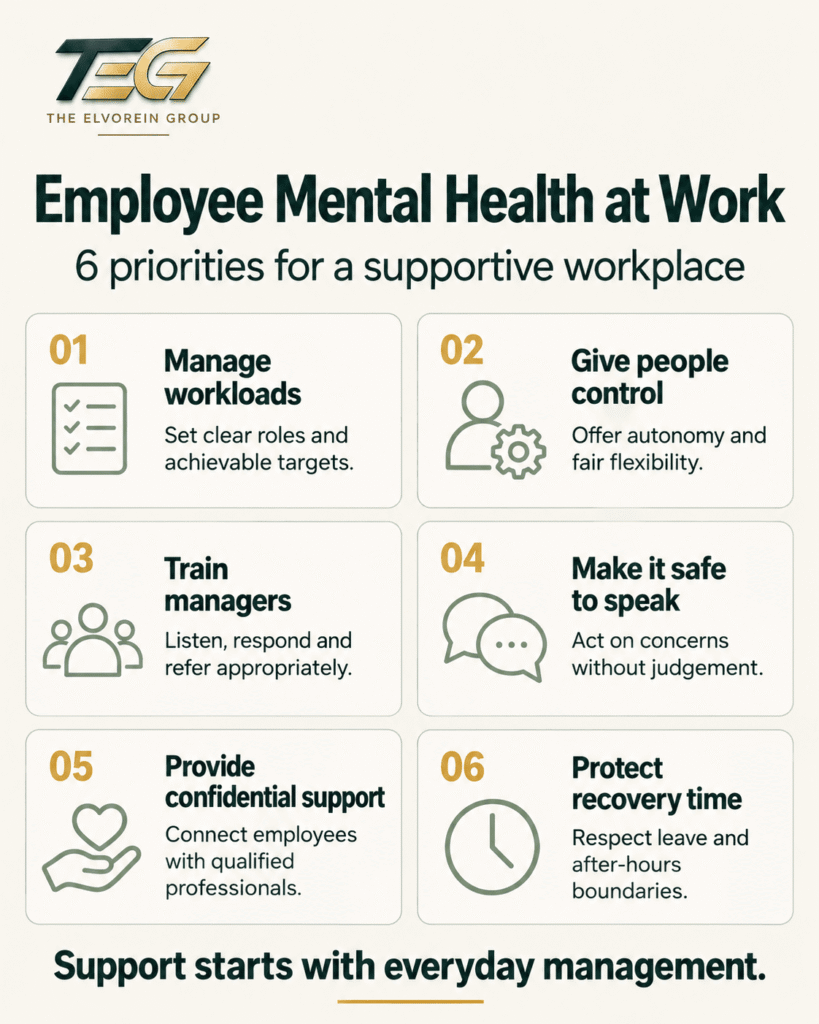
Six everyday workplace priorities that help support employee mental health.
The Role of Employees in Managing Workplace Stress
Employees can contribute by raising concerns early, discussing competing priorities and using available support.
Personal routines also matter. Rest, hobbies, movement, time with family and other activities can provide space away from work. What is helpful will differ from person to person.
Responsibility should remain shared. When a difficulty involves staffing, deadlines, unclear roles or management behaviour, the organisation needs to address those conditions.
Employees should know that asking for help is a reasonable step and that they do not have to resolve every workplace pressure alone.
Building a Culture That Supports Employee Mental Health at Work
The WHO Guidelines on Mental Health at Work recommend action across organisational working conditions, manager and worker training, individual support, accommodations and return-to-work programmes. This gives employers a framework that extends beyond awareness activities. who.int
At The Elvorein Group, we believe wellbeing initiatives should begin with a clear understanding of organisational needs. Training can develop useful skills, and those skills need support from workplace policies, capable managers and consistent follow-through.
Before scheduling the next programme, ask what employees need to experience differently. A clearer workload discussion? A safer route for raising concerns? Better access to professional support?
Choose the action around that need, assign responsibility and review what changes.
Employee mental health at work deserves sustained attention in the decisions organisations make every day.
Frequently Asked Questions
What is employee mental health at work?
Employee mental health at work refers to mental wellbeing within the working environment. Workplace discussions about it consider factors such as job demands, relationships, management practices, flexibility and access to support.
How can organisations support employee mental health?
Organisations can review working conditions, set realistic expectations, prepare managers for supportive conversations and establish clear, confidential support routes. Regular employee feedback helps identify where further action is needed.
What workplace pressures should employers review?
Useful areas to examine include workloads, role clarity, working hours, employee control over tasks, management behaviour and how concerns are handled.
What is HR’s role in workplace wellbeing?
HR can coordinate policies, support routes, manager training and individual work adjustments. Leadership and managers remain responsible for the everyday decisions that shape working conditions.
Can awareness sessions improve workplace culture?
Awareness sessions can introduce useful language and explain available support. Organisations should connect them with practical action and review whether employees experience meaningful improvements afterward.
Should managers provide counselling?
Managers should listen, discuss work-related support and guide employees towards appropriate services. Counselling and clinical care should be provided by qualified professionals.
This article provides general workplace wellbeing information. For personal health concerns, seek advice from a qualified health professional.