
Workplace diversity and inclusion are essential for creating organizations where people with different backgrounds, experiences, skills, identities, and perspectives can work together successfully. A truly inclusive workplace does more than bring diverse people together—it creates an environment where everyone feels respected, valued, heard, and able to contribute.
In today’s interconnected business environment, organizations increasingly work with people from different cultures, communities, genders, generations, and professional backgrounds. These differences can become a major strength when organizations create a culture based on fairness, respect, belonging, and equal opportunity.
The goal of workplace diversity and inclusion is not simply to increase representation. It is to make sure that employees have meaningful opportunities to participate, develop their skills, express their ideas, and contribute to organizational success.
Research from McKinsey’s Women in the Workplace report also highlights the importance of creating workplaces where employees feel valued, supported, and able to perform at their best.
As Sundar Pichai has said:
“A diverse mix of voices leads to better discussions, decisions, and outcomes for everyone.”
This article explores 16 practical ways to build workplace diversity and inclusion and create a more supportive organizational culture.
What Is Workplace Diversity and Inclusion?
Workplace diversity refers to having people with different backgrounds, experiences, characteristics, skills, and perspectives within an organization.
Workplace inclusion means creating an environment where these differences are respected and employees feel that they belong.
The two concepts are closely connected.
Diversity brings different people into the organization. Inclusion makes sure those people have a voice.
The original article explains that diversity and inclusion have become increasingly important across social and organizational systems and emphasizes the importance of understanding, acknowledging, and accepting different perspectives.
Organizations therefore need both diversity and inclusion to build a healthy workplace culture.
16 Ways to Build Workplace Diversity and Inclusion
1. Get Genuine Commitment From Top Management
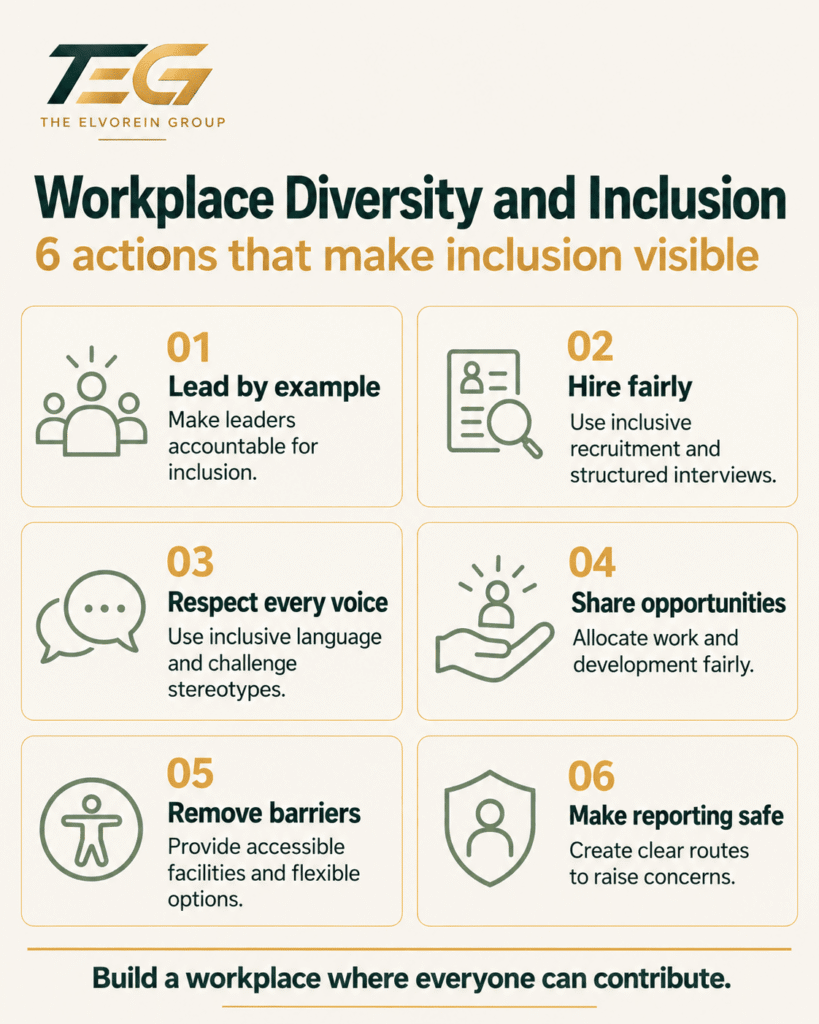
Successful workplace diversity and inclusion starts with leadership.
Diversity should not be treated as an HR responsibility alone. Senior management and organizational leaders need to demonstrate genuine commitment through their decisions, communication, policies, and everyday behaviour.
Leaders should clearly communicate that diversity, equality, respect, and inclusion are organizational priorities.
The original article emphasizes that the commitment to diversity and inclusion should begin at the board and senior-management level and translate into practical action plans.
When employees see leaders practicing inclusive behaviour, they are more likely to trust that the organization’s commitment is genuine.
2. Integrate Diversity and Inclusion Into Policies and Processes
For workplace diversity and inclusion to become part of organizational culture, they need to be integrated into everyday systems.
This includes:
- Recruitment
- Promotion
- Employee development
- Workplace policies
- Performance management
- Communication
- Organizational structures
- Employee engagement
The original article recommends integrating diversity and inclusion into company policies, processes, structures, and practices across functional areas.
Organizations should regularly review their policies and ask:
Does this process provide fair opportunities for different groups of employees?
If not, improvements may be necessary.
3. Use Inclusive Language
Communication plays an important role in workplace diversity and inclusion.
The International Labour Organization also provides resources concerning workplace equality, inclusion, and fair employment practices.
The language used in job advertisements, company websites, internal communication, social media, marketing campaigns, and everyday conversations can influence whether people feel included.
The original article recommends gender-neutral communication and language that represents diversity and inclusion.
Organizations should therefore avoid unnecessary stereotypes and use respectful language when communicating with employees and potential candidates.
4. Make Recruitment More Inclusive
Recruitment is one of the most important areas for building workplace diversity and inclusion.
Job descriptions should clearly communicate the skills, responsibilities, qualifications, and outcomes required for a position.
The original article recommends using gender-neutral language and clearly communicating role requirements and expected goals in job advertisements.
Recruiters should also examine whether unnecessary requirements could discourage qualified candidates from applying.
An inclusive recruitment process focuses on:
- Skills
- Qualifications
- Experience
- Potential
- Job-related competencies
The objective is to give capable candidates a fair opportunity.
5. Use Structured Interviews
Unstructured interviews can sometimes allow unconscious assumptions or stereotypes to influence recruitment decisions.
A structured interview process gives candidates comparable questions and allows organizations to assess applicants against relevant job requirements.
The original article recommends structured interviews so that candidates can respond to comparable questions and selection decisions can focus more directly on their answers and competencies.
This approach can make recruitment more consistent and transparent.

6. Make Leaders Accountable
Workplace diversity and inclusion require accountability.
Leaders should be responsible for ensuring that inclusive practices are followed within their teams.
For example, during meetings, managers can make sure that employees from different backgrounds have opportunities to share their perspectives.
The original article highlights the importance of leadership accountability and giving minority employees opportunities to express their viewpoints.
Inclusion means more than having a place in the room.
It means having a voice in the conversation.
7. Avoid Stereotyping and Biased Comments
Stereotypes can create an uncomfortable and exclusionary workplace.
Employees should avoid racial, gender-based, cultural, community-based, or other inappropriate comments.
The original article specifically recommends avoiding stereotypical, biased, or racial statements and comments in the workplace.
Organizations should encourage respectful communication even when employees have different opinions.
A healthy workplace allows people to disagree without disrespecting one another.
8. Ensure Fair Distribution of Work
Fairness is another important element of workplace diversity and inclusion.
Tasks should be distributed according to role requirements, skills, responsibilities, and organizational needs—not based on assumptions about gender.
The original article discusses how certain tasks during workplace events can sometimes be automatically assigned to women and recommends a more equal approach.
Whether the task involves organizing an event, preparing materials, managing a project, or handling administrative responsibilities, employees should not be assigned duties simply because of their gender.
Fairness should apply to everyday responsibilities as well as major career opportunities.
9. Provide Accessible Workplace Facilities
An inclusive organization should consider the different needs of its employees.
Workplace facilities should be safe, accessible, hygienic, and suitable for people with different needs and abilities.
The original article highlights the importance of appropriate facilities, including accessibility considerations for employees with disabilities.
Accessibility is not just about physical infrastructure.
It is also about dignity, independence, and belonging.
10. Support Employees With Caregiving Responsibilities
Employees may have responsibilities outside work, including caring for children or family members.
Organizations can support employees through appropriate facilities and policies where feasible.
The original article highlights workplace crèches and feeding rooms as examples of facilities that can support employees after childbirth and during the transition back to work.
Supportive policies can help employees manage professional and family responsibilities more effectively.
11. Avoid Stereotypes When Allocating Jobs
Job allocation should be based on skills, qualifications, performance, and potential—not assumptions.
The original article discusses how subconscious stereotypes can influence job allocation, including assumptions about women’s suitability for jobs in heavy industries.
Instead of asking:
“Who is traditionally expected to do this job?”
organizations should ask:
“Who has the skills and potential to succeed in this role?”
This shift can create more meaningful opportunities for employees.
12. Introduce Inclusion During Onboarding
The employee journey begins from the moment someone joins an organization.
Therefore, workplace diversity and inclusion should be introduced during onboarding.
Employees should understand:
- The organization’s values
- Workplace conduct expectations
- Equality and inclusion policies
- Available support systems
- Appropriate communication practices
The original article recommends introducing diversity and inclusion during onboarding while considering how much information should be shared and how it should be communicated.
Starting early helps establish expectations from the beginning.
13. Celebrate Different Cultures and Festivals
Cultural celebrations can create opportunities for employees to learn about one another.
Organizations can create calendars that recognize festivals and important events associated with the diverse communities represented within the workforce.
The original article recommends creating such calendars and encouraging employees to celebrate and appreciate different cultures.
Activities can include:
- Cultural days
- Festival celebrations
- Shared meals
- Cultural presentations
- Awareness sessions
- Storytelling activities
The objective should be meaningful appreciation rather than token representation.
14. Offer Flexible Working Options
Employees have different responsibilities and circumstances.
Where the nature of a job permits, flexible working arrangements can support employees while allowing them to meet professional responsibilities.
The original article recommends flexibility in working arrangements while trusting employees to complete their responsibilities within agreed timelines.
Flexible working can support workplace diversity and inclusion by recognizing that employees may have different needs outside the workplace.
15. Create Inclusive Relaxation and Reading Spaces
Small workplace details can also influence employees’ sense of belonging.
The original article recommends providing reading materials in office lounges, lobbies, and rest areas while ensuring that the content does not unnecessarily target or exclude particular genders or communities.
Organizations can create shared spaces where employees can relax, read, interact, and recharge.
16. Create Safe Ways to Report Offensive Behaviour
Employees need safe ways to raise concerns about offensive, inappropriate, or disrespectful behaviour.
The original article suggests a workplace drop-box concept through which employees can flag offensive language or phrases.
Modern organizations can adapt this idea through:
- Anonymous feedback channels
- Employee grievance systems
- Ethics hotlines
- HR reporting mechanisms
- Workplace culture surveys
The important principle is that employees should have a reasonable and safe way to raise concerns.
Why Workplace Diversity and Inclusion Matter
Workplace diversity and inclusion are about more than meeting representation targets.
They are about creating an environment where people with different experiences and perspectives can contribute meaningfully.
A diverse organization can bring together different approaches to problem-solving, creativity, innovation, and decision-making.
But diversity without inclusion may leave employees feeling unheard.
Similarly, inclusion without diversity can limit the range of perspectives available within an organization.
Organizations need both diversity and inclusion.
The original article emphasizes that organizations operate in competitive environments where understanding and accepting different perspectives is increasingly important.
How Can Organizations Improve Workplace Diversity and Inclusion?
Organizations can begin with simple questions:
- Are our recruitment processes inclusive?
- Do employees have equal opportunities?
- Are different voices heard during meetings?
- Are workplace facilities accessible?
- Do our policies support employees with different needs?
- Are our communication practices respectful?
- Can employees safely report inappropriate behaviour?
- Are managers accountable for creating inclusive teams?
Answering these questions honestly can help organizations identify areas that require improvement.
Workplace diversity and inclusion are built through everyday actions, not just written policies.
Building a Culture Where Everyone Belongs
The ultimate goal of workplace diversity and inclusion is to create a culture where employees do not feel pressured to hide important parts of who they are.
Employees should feel comfortable contributing their ideas, asking questions, learning from colleagues, and participating in organizational activities.
Leaders have an important role in creating this environment.
They can listen actively, challenge stereotypes, recognize contributions, encourage collaboration, and ensure that opportunities are distributed fairly.
Inclusion becomes meaningful when it can be experienced in everyday workplace interactions.
Conclusion
Building workplace diversity and inclusion is a continuous process.
It requires commitment from leadership, inclusive policies, fair recruitment, structured interviews, accountability, respectful communication, accessible facilities, flexible working arrangements, cultural awareness, and safe channels for employee concerns.
The 16 approaches discussed in this article show that inclusion can be strengthened through both major organizational policies and small everyday actions.
Most importantly, organizations should remember:
Diversity brings different people together. Inclusion makes them feel that they belong.
When employees feel respected, valued, heard, and supported, differences can become a source of learning, collaboration, innovation, and organizational strength.
As Pat Wadors puts it:
“When we listen and celebrate what is both common and different, we become wiser, more inclusive, and better as an organization.”
A truly inclusive organization does not ask employees to hide their differences.
It creates an environment where those differences can contribute to a stronger and more successful workplace.
Workplace diversity and inclusion are not simply HR initiatives—they are essential parts of building a better organization.