

Diversity and inclusion training in Bhubaneswar should help teams recognise bias and change everyday communication, participation and decision habits. Start with meetings, feedback and access to meaningful work. Ask who can contribute, whose ideas receive attention and what managers do when a concern is raised. Evaluate specific changes rather than relying only on awareness scores.
Consider an illustrative project meeting in Bhubaneswar. A junior colleague explains a delivery concern and receives little response. Later, a senior employee repeats the point and the group agrees it deserves action. The meeting moves on without acknowledging the first contribution.
No one needs to make an openly hostile comment for participation to become unequal. Repeated small decisions can teach employees whose voice matters. A useful inclusion programme makes those decisions visible and gives managers alternatives they can practise. Effective diversity and inclusion training helps managers recognise these patterns and build fairer participation into everyday workplace decisions.
What current evidence contributes
Deloitte’s Women at Work 2026 report examines workplace experiences among 7,500 non-Deloitte women across 15 countries. Its findings raise questions about non-inclusive behaviour, reporting confidence and progression. They should not be presented as an estimate of conditions in Bhubaneswar.
The local editorial implication is to examine whether employees experience the organisation’s stated values in ordinary work. Diversity and inclusion training can help organisations turn these values into practical workplace behaviours. A policy can say every voice matters while the meeting format rewards only fast, confident interruption.
For employers around Infocity, Patia and Chandrasekharpur, inclusion should therefore connect to actual team routines. Fortune Towers is a geographic reference in this article, not evidence about the culture of organisations operating there.
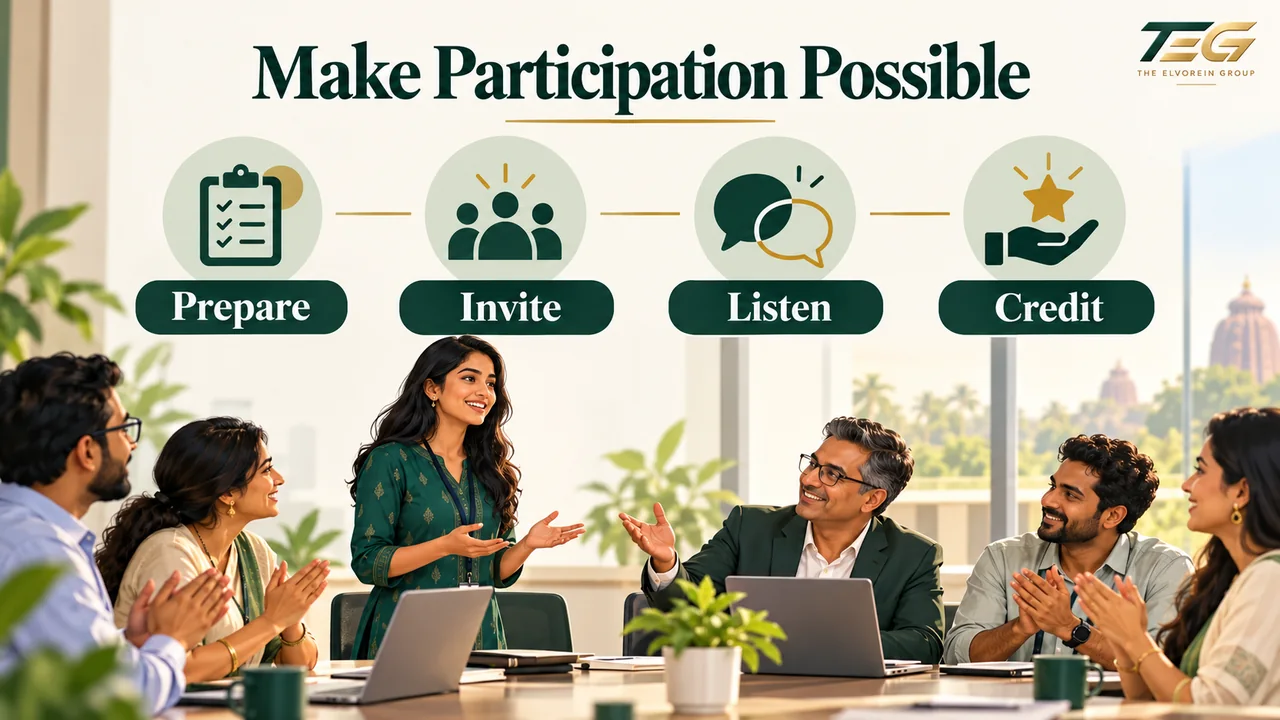
Inclusive leadership becomes visible when a manager notices who has relevant information and creates a practical way for them to contribute. Inclusive communication includes preparation, respectful listening and acknowledgement of an idea’s origin, alongside a clear record of the decision.
Observe a meeting before designing the workshop
Choose a recurring meeting and review its purpose, preparation and participation. Who receives the agenda? Who has enough information to form a view? Who speaks first? Who summarises the decision? Whose questions remain unanswered?
Use observation with appropriate consent and privacy safeguards. The purpose is to improve the routine, not to rank personalities or diagnose people from a single interaction.
Ask participants what makes contribution easier or harder. Some may prefer time to read before speaking. Others may need an accessible format or a clearer explanation of unfamiliar terms. A remote colleague may struggle because the room microphone does not capture discussion.
These are different barriers requiring different responses.Well-designed diversity and inclusion training helps teams identify these barriers and choose appropriate ways to address them. A generic instruction to “be confident” does not resolve all of them.
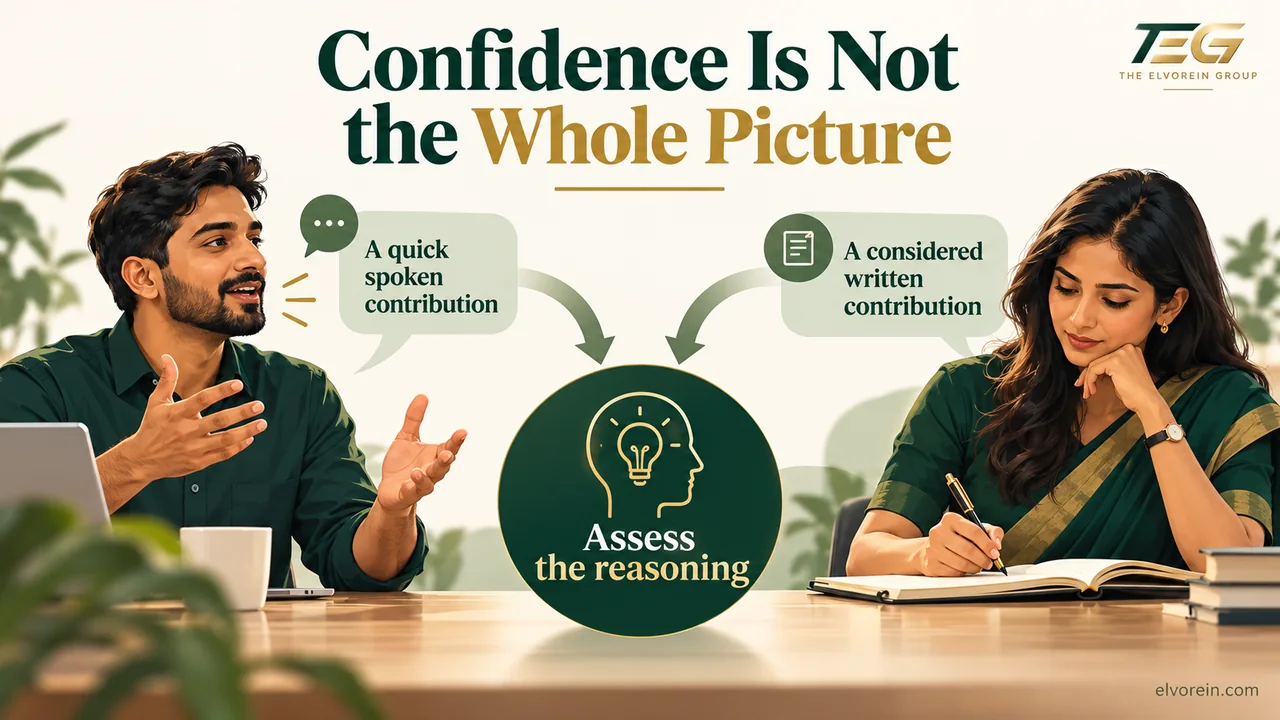
Separate communication style from contribution quality
Fluent, immediate speech can be mistaken for strong judgement. A thoughtful employee may need a moment to organise an answer, especially when working across languages. Evaluate the reasoning and relevance of the contribution alongside its delivery.
In an illustrative team using Odia for informal coordination and English for client reporting, agree when each language is appropriate and how decisions will be recorded. Ensure everyone affected can understand the final instruction.
Do not stereotype employees by language, age, gender or educational background. Ask what the task requires and what support enables participation. Clear client communication may be essential for a role; a particular accent or social style may not be.
Training can help managers recognise these distinctions through work samples and structured discussion.Practical diversity and inclusion training also helps managers evaluate contributions using relevant work-related criteria.
Redesign participation with small, practical changes
Send a clear question before the meeting and allow brief individual reflection before discussion. Invite input from people responsible for different parts of the work. Offer a written channel where it helps capture a considered response.
The chair should acknowledge the origin of an idea and check whether it was understood. If someone is interrupted, return the floor to them. If a decision is made quickly, ask what risk or perspective may have been missed.
These are suggested practices to test, not universal rules.Diversity and inclusion training should prepare managers to adapt these practices to different team situations. A fast operational briefing and a complex planning meeting need different formats. The common aim is useful participation, rather than equal speaking time regardless of relevance.
Record the decision, its owner and any unresolved question so that influence does not depend entirely on being present in the room.
Look beyond meetings to developmental assignments
Participation also depends on who receives visible work. Review how managers choose employees for client presentations, leadership opportunities and stretch assignments. Are criteria clear, or does the same familiar person always receive the opportunity?
Ask whether a colleague has been overlooked because they have not previously done the task, while never receiving a chance to learn it. Distinguish a genuine readiness requirement from an assumption that has not been tested.
Provide support appropriate to the assignment. A first presentation might include rehearsal and feedback. A development opportunity should not become a test with no preparation and disproportionate consequences.
HR can review patterns over time using proportionate information. Small samples require care; a difference should prompt questions rather than an automatic conclusion about intent.

Practise the manager’s response to exclusion
A useful scenario includes a dismissive remark, interrupted contribution or concern about unfair access. The manager should respond calmly, establish the issue and take an appropriate next step.
For an ordinary meeting behaviour, this might mean returning to the interrupted speaker and clarifying the discussion standard. For a serious allegation or protected concern, the manager should use the applicable organisational process.
Avoid making the affected employee responsible for teaching everyone else. They may choose to contribute, but should not be required to disclose personal experiences for the session to work.
The programme can connect with POSH and workplace awareness while keeping the scopes clear. Inclusion learning does not replace a formal reporting or inquiry process.
Give senior leaders an observable role
Senior leaders influence participation by how they ask questions and respond to disagreement. If they announce a preferred answer before inviting input, employees may reasonably assume the decision is already made.
Ask leaders to model uncertainty where appropriate, explain decision criteria and acknowledge when another person’s information changes the plan. This makes the invitation to contribute more credible.
Review consistency between messages and rewards. If managers praise inclusion but promote only people with constant after-hours visibility, employees will notice the stronger signal.
Inclusion is therefore connected to leadership development and management routines. A workshop can introduce and practise the behaviours; leaders must support their use afterwards.Consistent diversity and inclusion training reinforces these behaviours through regular feedback and management support.
Evaluate a change employees can recognise
Select one or two routines to improve. For meetings, check whether agendas clarify the question, interruptions are addressed and decisions are recorded. For assignments, check whether managers can explain selection criteria and support arrangements.
Ask employees whether they can contribute relevant information and receive a respectful response. Handle feedback carefully, particularly in small teams where identity may be inferred.
Avoid claiming that an awareness session has eliminated bias. Look for evidence of better decisions and more consistent opportunities. Continue reviewing situations where the new practice is difficult to apply.
The Elvorein Group’s Diversity & Inclusion service provides a starting point for discussing bias awareness and inclusive communication. Share a programme brief with anonymised examples, participant roles and the routine you want to improve.
Diversity and inclusion training: a practical review checklist
- Define the situation participants need to handle.
- Use a relevant, non-identifying work or learning example.
- Agree the behaviour or decision that should improve.
- Confirm who will support application afterwards.
- Review evidence and revise the next step.
Frequently asked questions
What should diversity and inclusion training change in everyday work?
It should help employees and managers recognise barriers and practise more inclusive behaviour. Useful targets include meeting participation, feedback quality and access to development. Choose observable routines so that the organisation can review whether learning is being applied.
Is inclusion mainly about hiring different people?
Recruitment is one part of the picture. Inclusion also concerns whether employees can participate, access information and receive fair consideration once they join. A diverse team can still have routines that consistently overlook some contributions.
How can managers avoid confusing confidence with competence?
Use work-related criteria and ask people to explain their reasoning. Allow preparation where the task permits it and assess the substance of the answer. Communication requirements should reflect the role, rather than assumptions about accent or personality.
Should employees share personal discrimination experiences in a workshop?
Participation should not depend on personal disclosure. Fictional scenarios and anonymised process examples can support useful discussion. Any individual concern should have access to an appropriate private route rather than being examined by the group.
Can inclusion training guarantee fairer promotion decisions?
No. Training can support awareness and manager practice, while promotion also depends on criteria, evidence and organisational processes. Review those arrangements alongside learning and investigate differences carefully before drawing conclusions about causes.
Related reading: Inclusive Onboarding in Odisha: A Practical HR Guide.
