

Employee wellbeing for shift teams in Odisha starts with realistic staffing, usable handovers, fair access to breaks and supportive supervisor communication. Learning sessions should fit the operating schedule and use situations employees recognise. HR and operations should agree responsibilities together so that wellbeing becomes part of how work is organised.
Consider an illustrative customer-facing workplace in Puri during a busy period. A team member handles a difficult interaction, misses the usual break and starts the next assignment without a proper handover. The supervisor notices irritability and asks the employee to be more positive.
The employee may benefit from skills for responding constructively under pressure. The supervisor also needs to examine coverage, recovery opportunities and the information required for the next task. Both parts belong in the discussion.Effective employee wellbeing for shift teams requires organisations to understand the challenges employees face during different working hours and provide practical workplace support.
Why one office-style wellness event may miss the team
A session scheduled for a quiet weekday afternoon may exclude the employees who face the busiest customer periods. Releasing everyone at once may be impossible. Asking staff to attend outside their normal schedule can create another demand.
Begin with the roster. Identify which groups need access, what coverage is required and how equivalent learning opportunities can be offered. Repeated smaller sessions or a staged approach may be more workable than one large event.
Puri provides a relevant hospitality and tourism setting, but this article does not claim that all local employers operate alike. The same planning questions can apply to customer service, institutional support and other shift-based teams in Cuttack or Berhampur.
The organisation’s actual work pattern should determine the programme.A well-planned employee wellbeing for shift teams programme should address both individual challenges and workplace conditions.
For workplace wellness in Puri, discuss the actual roster and customer-facing demands before choosing an activity. Supervisor support should include a usable handover, an appropriate response after difficult interactions and a clear route for decisions beyond the employee’s authority.
Review the shift as a complete experience
Map what happens before, during and after a shift. How are employees briefed? Where do they find updated instructions? What happens when a colleague is absent? Who decides whether a break can be moved, and how is it restored?
Look at the points where pressure accumulates. A late start, incomplete handover and unclear escalation can combine even when each issue appears minor in isolation. Ask employees which recurring situation makes the next task harder.Communication is an essential part of employee wellbeing for shift teams because proper handovers reduce confusion and unnecessary work pressure.
The WHO mental health at work guidance supports attention to working conditions and organisational interventions. Applying that principle locally means examining the shift system alongside individual awareness and support.
Use work-focused questions. Employees should be able to discuss an unmanageable handover without providing personal health information.
Make the handover a wellbeing intervention
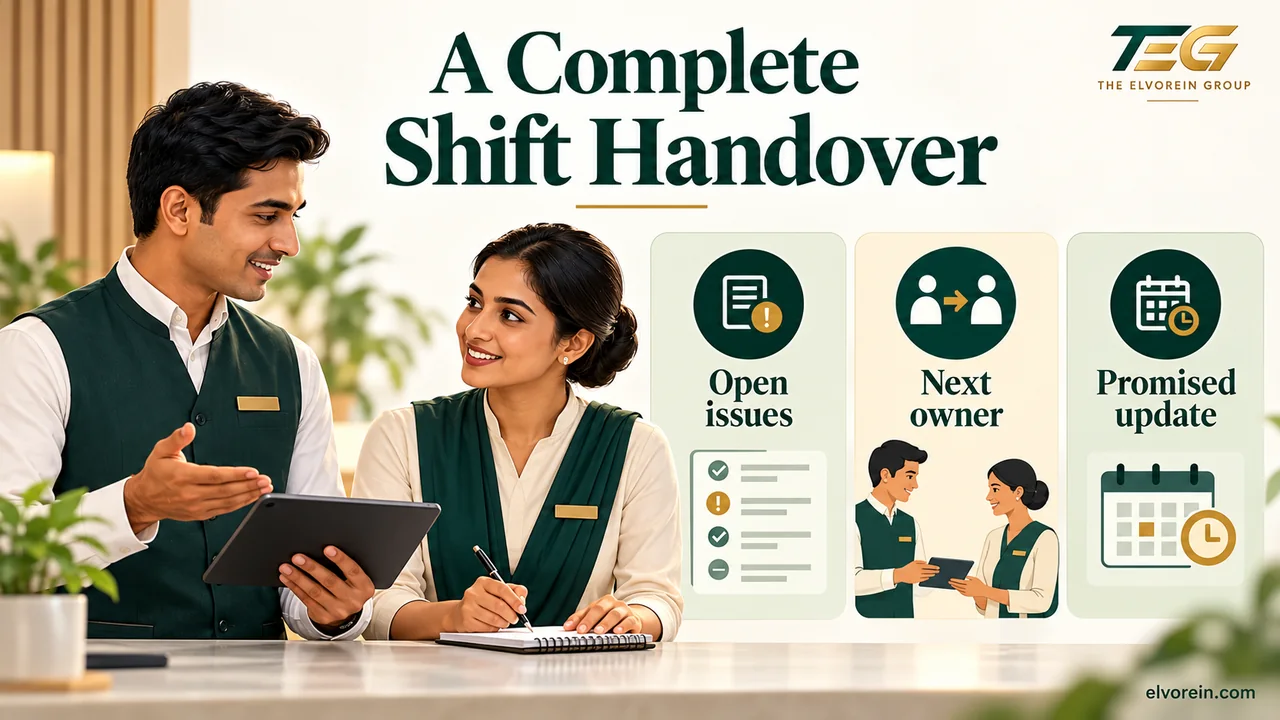
A complete handover reduces uncertainty. Agree what the incoming employee needs: current priorities, unresolved issues, commitments already made, relevant risks and the next decision owner.
Keep the format short enough to use during a busy transition. A checklist should support a conversation rather than become another document completed without review. Give employees a way to clarify missing information before taking over responsibility.
In an illustrative Cuttack service operation, an unresolved customer request might pass through several shifts. Naming the next owner and the promised update time prevents the incoming colleague from discovering the issue through an angry follow-up.
Practise handovers with realistic interruptions. Ask whether the employee can still identify the essential information. This connects wellbeing with communication and operational reliability, without claiming that a checklist alone resolves all pressure.
Train supervisors to respond after difficult interactions
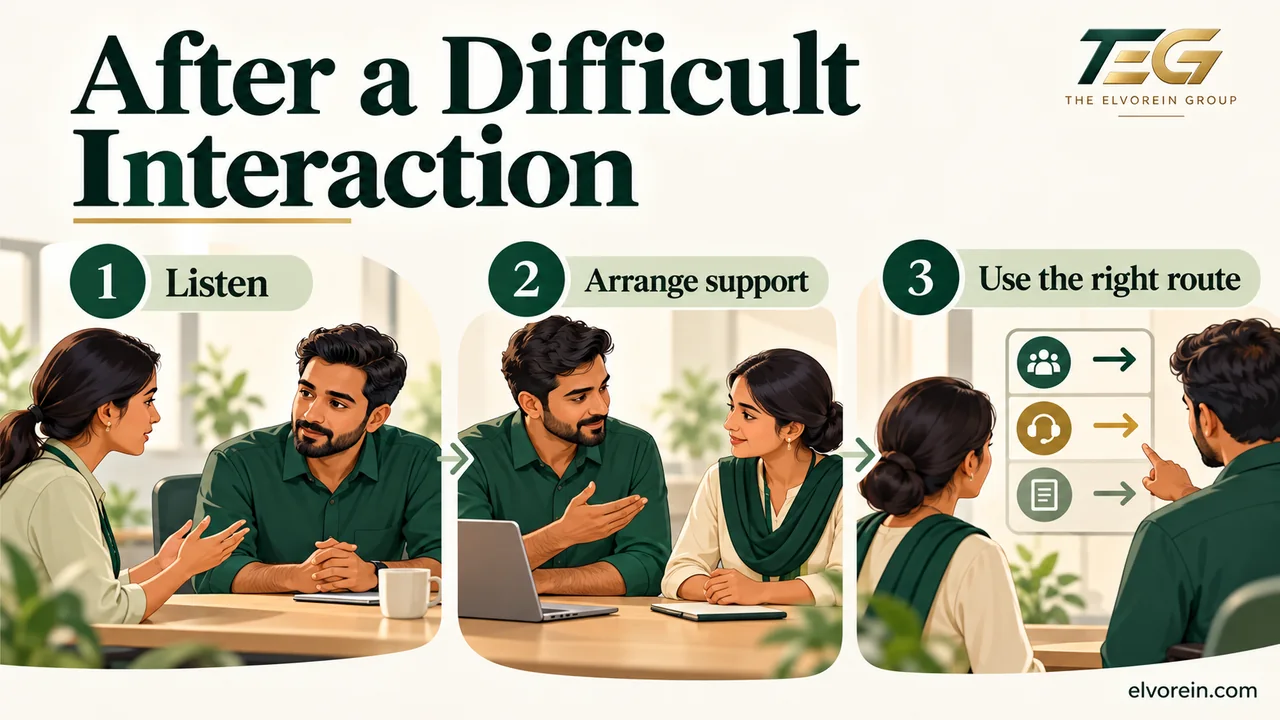
An employee who has just experienced an aggressive customer interaction may need a brief work-focused check-in. The supervisor can ask what happened, whether immediate operational support is needed and what should happen before the employee resumes the next task.
Avoid requiring the person to recount a sensitive incident in front of colleagues. Follow the organisation’s escalation procedures for threats, harassment or safety concerns. A general awareness session should explain where those boundaries sit.
Use role-play to practise calm, respectful responses. Include situations where the supervisor must arrange coverage or involve another manager. This makes the exercise more realistic than asking participants to repeat reassuring phrases.
Supervisors also need access to support. They should not be expected to absorb every difficult situation while managing an unchanged workload and no decision authority.
Discuss emotional awareness without demanding constant positivity
Customer-facing work often requires employees to manage their responses during a difficult exchange. Development can help people notice rising tension, pause where possible and choose a constructive next action.
That does not require pretending the interaction was acceptable or suppressing every concern. Employees need a credible route to report patterns and request help. Managers should distinguish professional conduct from an expectation that staff remain cheerful under any conditions.
Facilitated scenarios can explore tone, listening and escalation. Use fictional examples that resemble the work, with no identifying details from active cases. Let participants discuss options rather than disclose personal experiences.
This is awareness and workplace skill development. It should not be presented as treatment or as a substitute for appropriately qualified individual support.
Make participation fair across roles and locations
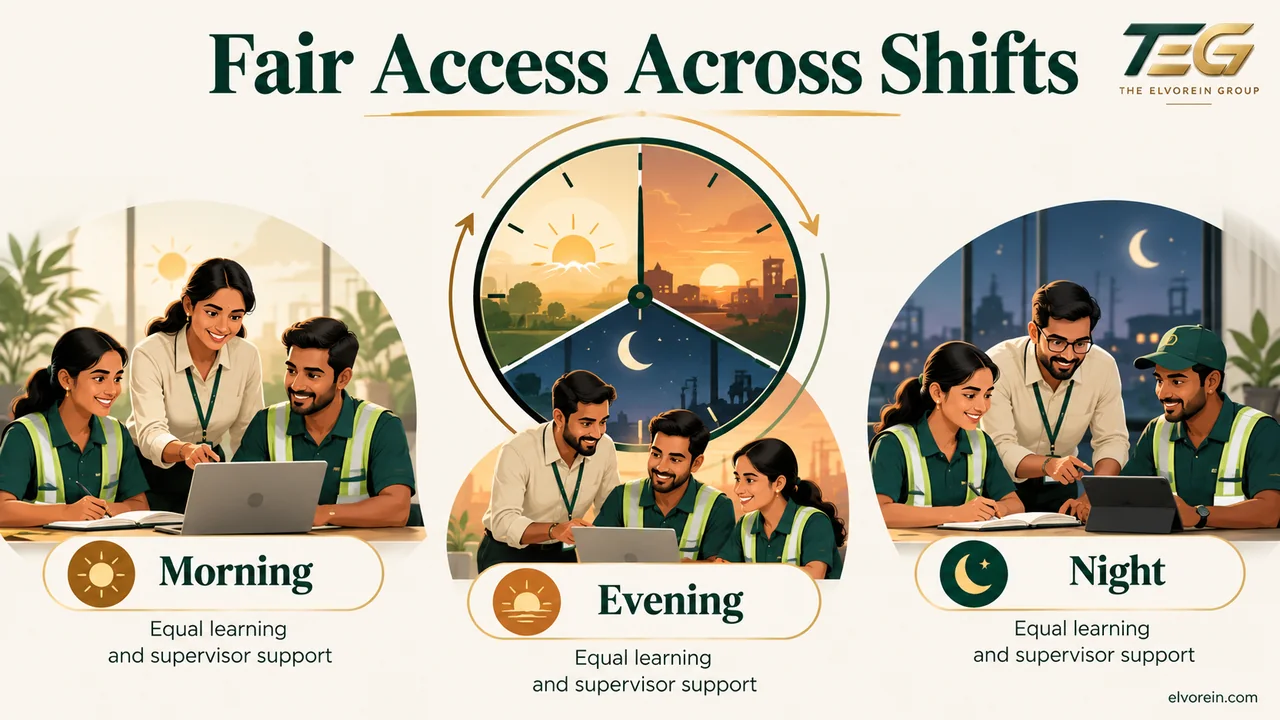
Check who receives the learning. Permanent day staff may have easier access than evening teams, temporary colleagues or people based at another location. Where appropriate, coordinate relevant awareness with the actual workforce arrangements.
Use language that participants understand. Odia explanation can support engagement, while English terminology may still be necessary for shared documents or customer communication. Test understanding through a practical task rather than assuming silence means agreement.
For organisations spanning Puri, Bhubaneswar and Berhampur, compare workflows before combining participants. Shared principles can be taught together; role-specific practice may need separate groups.
Confirm accessibility, travel and timing with the provider. Targeting a city in content does not establish that a provider has a local office there.
Give HR and operations a shared action list
After the initial review, choose a small number of changes. Operations might clarify coverage and handovers. HR might coordinate awareness and supervisor development. Senior leaders might resolve a recurring capacity issue or conflicting service promise.Successful employee wellbeing for shift teams also depends on cooperation between HR departments, supervisors and operational managers.
Assign an owner to each action. State what employees should notice when it is working. “Improve wellbeing” is too broad; “incoming staff receive the unresolved request and next action before taking over” is observable.
Review whether the change creates a burden elsewhere. A more detailed handover may require overlap time. A new escalation route may fail if the designated person is unavailable. Test the arrangement during normal operations before expanding it.
This turns feedback into a practical improvement cycle.
Measure access and working conditions
Track whether all relevant groups could attend, whether supervisors understood the response process and whether agreed operational changes occurred. Ask employees if they can raise a workload or handover concern and receive a useful answer.
Treat small-team feedback carefully because individuals may be identifiable. Avoid publishing subgroup results that expose a person’s response. Explain the purpose of data collection and limit it to what is needed.
Changes in absence, complaints or turnover require wider interpretation. They can prompt investigation but do not prove a wellness programme caused the result.Organisations can improve employee wellbeing for shift teams by regularly reviewing working conditions, employee feedback and supervisor support.
The Elvorein Group’s Workplace Wellness service is a starting point for discussing stress awareness and constructive responses to pressure. Bring shift patterns, participant roles and practical constraints when you discuss a programme. For supervisor communication needs, also consider the leadership service.
Employee wellbeing for shift teams: a practical review checklist
- Define the situation participants need to handle.
- Use a relevant, non-identifying work or learning example.
- Agree the behaviour or decision that should improve.
- Confirm who will support application afterwards.
- Review evidence and revise the next step.
Frequently asked questions
How can a shift team attend wellbeing training without disrupting service?
Plan coverage first, then discuss repeat sessions or a staged format. Give different shifts comparable opportunities to participate. Avoid assuming employees can attend unpaid or outside their normal arrangements; scheduling should follow the employer’s applicable policies and requirements.
What should supervisors learn in a wellbeing programme?
They should practise listening, clarifying work demands, arranging operational support and using appropriate escalation routes. They also need to understand their boundaries. A supervisor can support the working environment without taking on the role of a health professional.
Can the same programme serve Puri hospitality and Cuttack office teams?
Some principles overlap, including respectful communication and support. The scenarios, scheduling and operational actions should reflect each team’s work. A shared introduction can be followed by separate practice where responsibilities or customer situations differ.
Should wellbeing activities focus on employee resilience?
Resilience can be one useful topic, alongside emotional awareness and communication. The organisation should also examine staffing, priorities, handovers and support. Asking employees to cope better is incomplete when avoidable work conditions remain unresolved.
What is a useful first measure of progress?
Check whether the agreed change is happening: complete handovers, clearer escalation or access to support. Combine that observation with proportionate employee feedback. Avoid interpreting attendance alone as evidence of better wellbeing or improved health.
Related reading: Workplace Wellness in Bhubaneswar: A Practical HR Guide.
