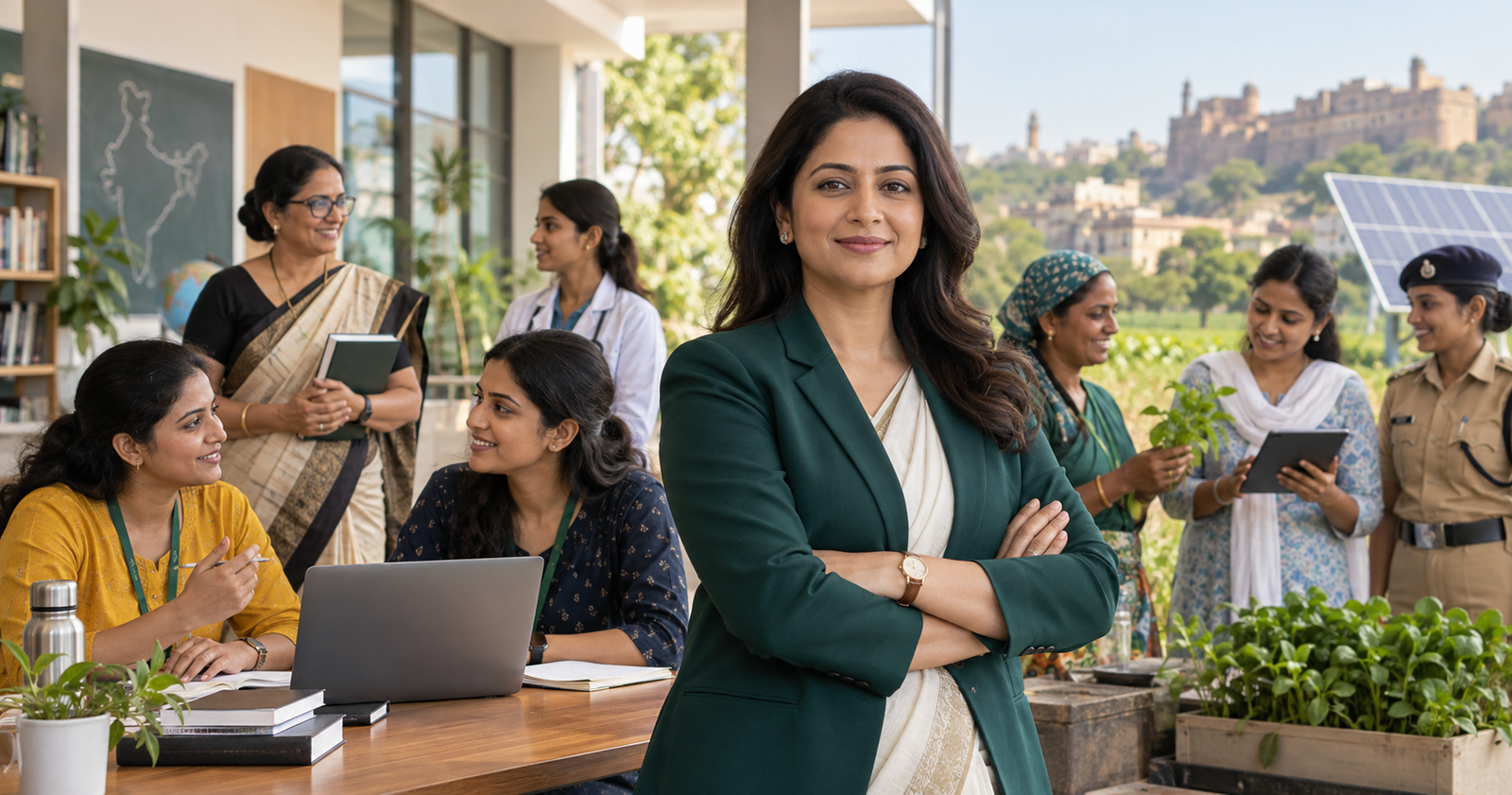
Women across India are creating change through knowledge, work and leadership
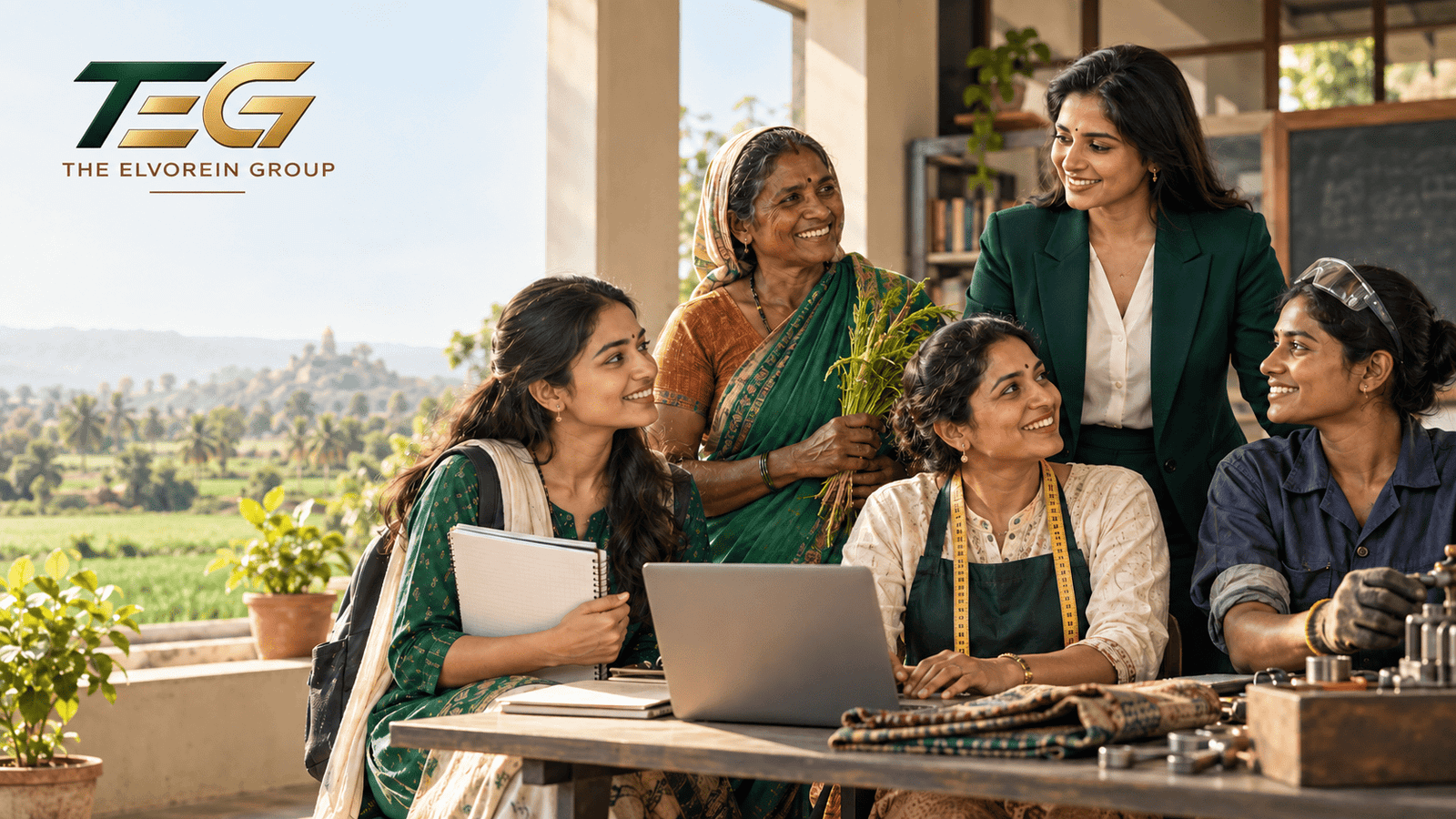
A personal reflection on courage, equality and the opportunity to live with dignity
Women Empowerment in India begins when every woman receives the education, safety, respect and opportunity to shape her own life. Across homes, farms, workplaces and public institutions, women continue to demonstrate courage while challenging the limitations placed upon them.
“Define success on your own terms, achieve it by your own rules, and build a life you’re proud to live.”
Anne Sweeney
Being a woman has made my life demanding, rewarding and deeply meaningful. I have experienced the tension that many women know well: the need to care for a family, honour professional responsibilities and still protect some time for oneself. These roles can enrich life, but they can also compete for the same limited energy.
After travelling this far in my own journey, I can say with conviction that I take pride in being a woman. I feel equally proud to be the mother of a daughter. That pride, however, comes with questions. Why do so many girls still have to prove that their lives matter? Why must women negotiate for freedoms that should already belong to them? And why do many women learn to reduce their aspirations before the world even has the opportunity to see what they can do?
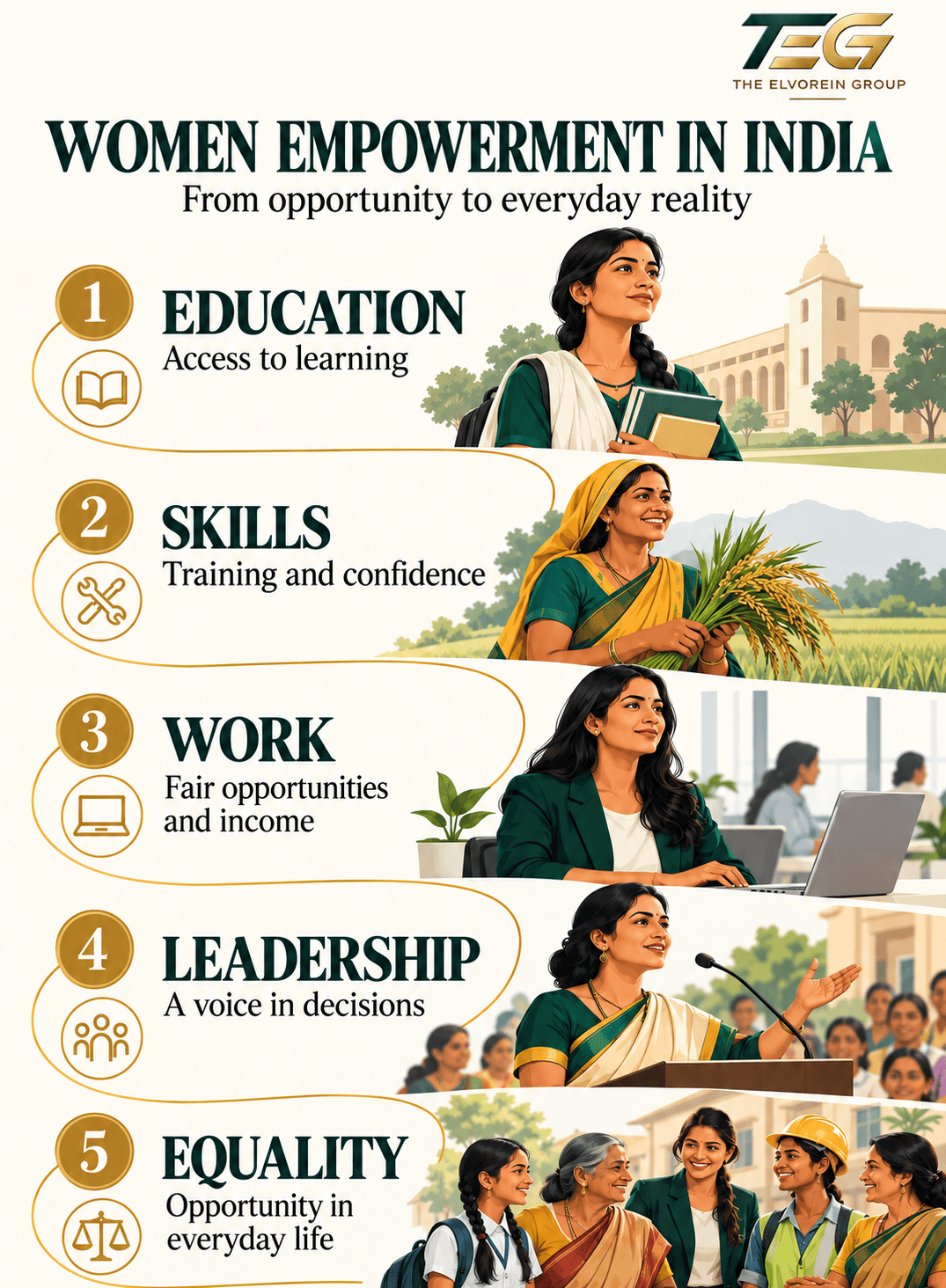
Women empowerment in India begins with answering those questions honestly. It involves safety, education, healthcare, financial independence and the freedom to make decisions about one’s own life. It also requires families, workplaces and institutions to examine the expectations they place on women.Education, skills and access to opportunities help women shape decisions and lead change in everyday life.
Why Women Empowerment in India Still Matters
The scale of gender inequality cannot be understood through individual stories alone. The United Nations Population Fund reported in 2020 that an estimated 142.6 million women and girls were “missing” globally because of gender-biased sex selection and excess female mortality. India accounted for a substantial share of that estimate. More recent UNFPA reporting notes improvement in India’s sex ratio at birth, while also warning that discrimination against girls has not disappeared. Read the UNFPA State of World Population 2020 report.
Violence remains another serious barrier. Crime figures must always be read with care because reported cases do not capture every experience, but official data continue to show the scale of crimes against women. Fear, social pressure, financial dependence and concern about family reputation can prevent survivors from seeking help. The National Crime Records Bureau publishes the official Crime in India series, which should be used whenever figures in this article are updated. View the NCRB Crime in India 2023 report.
These realities are disturbing, but women’s lives must not be described only through suffering. Across homes, farms, offices, institutions and public service, women continue to create value, support families and lead change. Their contributions reveal what becomes possible when ability meets opportunity.
Women Empowerment in India Through Courage and Contribution
1 Working Women Who Carry More Than One Role
A working woman often moves between professional deadlines and responsibilities at home without a clear boundary between the two. She may lead a team during the day, care for a child in the evening and manage the invisible planning that keeps a household functioning. Her effort may look ordinary because it happens every day, yet it demands discipline, resilience and constant negotiation.
Women empowerment in India must therefore include workplaces that judge performance fairly and families that share responsibility. Flexible policies can help, but policies alone cannot correct a culture in which caregiving automatically becomes a woman’s duty. Real progress appears when men, managers and family members participate rather than merely express support.
2 Women Farmers Who Sustain Rural India
Travel through the countryside and you will see women sowing seeds, tending crops, removing weeds, harvesting produce and caring for livestock. Their labour supports households and agricultural communities, although ownership, recognition and access to resources do not always reflect the work they perform.
Their contribution deserves more than admiration from a distance. Women farmers need access to land rights, training, credit, technology and decision-making spaces. When their knowledge receives recognition and practical support, agriculture becomes more inclusive and rural communities become stronger.Recognising women farmers and giving them access to land, credit and technology is an important part of Women Empowerment in India.
3 Women Serving in the Indian Armed Forces
Women in the Indian Armed Forces have entered roles that were once considered exclusively male, including fighter aviation. They train under demanding conditions, operate complex aircraft and prepare for missions where discipline and judgment matter more than gender. Their presence in the cockpit does more than break a visible barrier. It expands what younger girls can imagine for themselves.
Their achievement also carries a useful lesson. Women do not need lower standards. They need fair access to training, responsibility and advancement. When institutions remove unnecessary restrictions, talent has room to prove itself.
4 Pappammal and a Lifetime Devoted to Organic Farming
Pappammal of Tamil Nadu became widely known for her commitment to organic farming. At an age when most people withdraw from physically demanding work, she continued tending her farm and sharing agricultural knowledge. The Government of India honoured her with the Padma Shri in 2021 for her contribution to agriculture. She passed away in September 2024 at the age of 109, leaving behind an example of lifelong purpose.
Her story reminds us that leadership does not always arrive through a corporate title or formal institution. It can grow from consistency, practical knowledge and service to a community. Her age did not define the limit of her contribution.
5 Kamala Pujari and the Protection of Indigenous Seeds
Kamala Pujari came from a tribal community in Odisha and had little access to formal education. Yet she developed extensive knowledge of traditional agriculture and helped preserve indigenous varieties of paddy. She also encouraged farmers to reduce their dependence on chemical inputs and adopt organic practices. India recognised her contribution with the Padma Shri in 2019.
Her journey challenges the assumption that expertise can emerge only from classrooms and formal qualifications. Education remains essential, but lived knowledge also deserves respect. Kamala Pujari showed how local experience can protect biodiversity, influence farming practices and serve communities far beyond one village.
Women in Leadership and the Workplace
More women are building careers as entrepreneurs, executives, professionals, public servants, educators and community leaders. Their journeys rarely result from favouritism. They study, develop skills, accept difficult assignments and learn from setbacks. Many also navigate expectations that their male colleagues do not encounter in the same way.
However, women empowerment in India cannot be measured only by the number of women who reach senior positions. It must also be visible in everyday workplace behaviour. Who receives challenging assignments? Whose ideas receive attention? Who gets interrupted? Who carries administrative or emotional work without recognition? Who is considered ‘ready’ for leadership? These questions reveal whether opportunity is genuinely equal.
Organizations can respond through transparent promotion criteria, safe reporting systems, fair pay practices, thoughtful parental support and leadership development that includes women at different career stages.
Equal Opportunity Requires More Than Sympathy
Women do not need to be treated as symbols of sacrifice, nor should empowerment depend on exceptional achievement. A woman should not have to become an award winner, a fighter pilot or a senior executive before society respects her choices. Every woman deserves dignity, safety and the right to shape her own life.
Harmful social beliefs can also be reinforced by women because people often reproduce the norms they inherited. Blaming women for sustaining patriarchy, however, ignores the systems that reward conformity and punish resistance. Change becomes possible when women and men question these beliefs together and create different expectations at home, at work and in society.
Empathy matters, but empowerment needs action. Girls require uninterrupted education and access to healthcare. Women require control over financial decisions and their own bodies. Families must stop treating ambition as selfishness. Workplaces must create fair systems instead of expecting individual women to overcome every structural barrier through personal resilience.
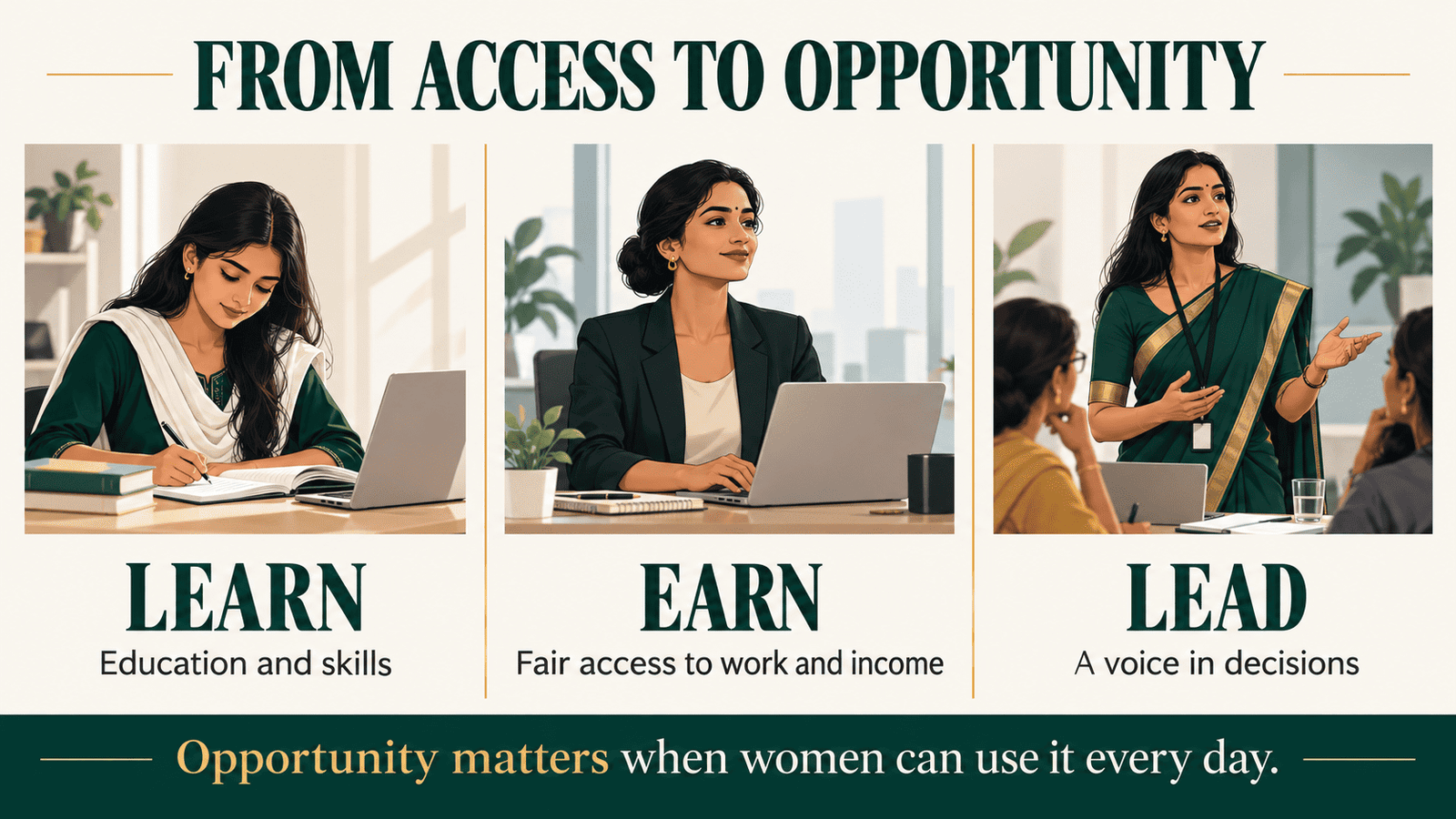
How Families and Organizations Can Support Women
Share domestic and caregiving responsibilities instead of treating them as women’s work.
Keep girls in education and encourage them to explore careers without gender-based limits.
Create safe channels for reporting harassment, discrimination and violence.
Use transparent criteria for hiring, pay, promotion and leadership opportunities.
Give women access to mentoring, skill development and assignments that build decision-making experience.
Listen to women as individuals rather than assuming that every woman has the same needs or ambitions.
Building a More Equal Future
The stories of working women, farmers, servicewomen, Pappammal and Kamala Pujari are different, but they point to the same truth: talent exists everywhere, while opportunity does not. Women empowerment in India will advance when dignity and freedom no longer depend on geography, income, age, education or family background.
I want my daughter and every girl to grow up knowing that she does not have to shrink herself to make others comfortable. She should be able to learn, work, lead, care, rest, speak and choose without apologising for taking her rightful place in the world.
Let us recognise strong women, support them and raise a generation that understands equality not as a favour, but as a normal condition of a just society.
Internal Link Placement
In the paragraph beginning “Organizations can respond,” link the words “leadership development” to the relevant Elvorein Leadership Development service page. If available, also link “safe reporting systems” to the applicable workplace safety or POSH resource. Use the verified website URLs rather than inventing a destination.
External Sources Included
UNFPA State of World Population 2020
UNFPA India on gender equality and the sex ratio at birth
Government of India Padma Awards portal
The future of Women Empowerment in India depends on turning equal opportunity from an aspiration into an everyday reality.Women empowerment; gender equality in India; inspiring Indian women; women leaders in India; women farmers in India; equal opportunities for Women across India creating change through knowledge, leadership and equal opportunity.