

Inclusive onboarding in Odisha should make job expectations, information and support accessible to new employees from different backgrounds. Assess people against relevant work standards, explain unwritten routines and provide opportunities to ask questions. Managers should distinguish a genuine capability gap from unfamiliarity with the organisation’s language, systems or social habits.A structured inclusive onboarding in Odisha process helps organisations create a welcoming workplace while ensuring that every new employee understands their responsibilities and performance expectations.
Imagine an illustrative new joiner in a Berhampur office. They complete assigned work carefully but speak little in informal meetings. After two weeks, a manager calls them a poor cultural fit. Nobody has explained whether employees are expected to challenge instructions, how assignments are prioritised or whom they can approach with questions.
The organisation has reached a conclusion before making the environment understandable. Inclusive onboarding improves the quality of that assessment. It helps both the employee and employer discover what support and development are actually needed.
Replace vague fit judgements with work-related criteria
Ask what the role requires. Reliability, collaboration and respectful communication can be defined through behaviour. Similar hobbies, a particular social style or familiarity with office shorthand are usually less useful indicators.
The CIPD equality, diversity and inclusion guidance provides a professional reference for examining organisational practices. The practical application here is to make standards clearer and review how decisions are reached.
For a Cuttack employer, that might mean defining a complete customer handover. For a Puri organisation, it might mean specifying how an employee requests supervisor support. These examples illustrate roles, rather than assigning characteristics to a city’s workforce.
Use the criteria consistently and give employees a fair opportunity to demonstrate them.Effective inclusive onboarding in Odisha also requires managers to apply the same role-related standards when evaluating new employees, regardless of their background or communication style.
Employee onboarding in Odisha should make work standards accessible before managers judge a new colleague’s fit. Bias awareness helps teams question whether an assessment reflects relevant work evidence or merely familiarity with the organisation’s usual language, social habits and informal ways of asking for help.
Explain the organisation’s unwritten rules
Established colleagues often know which manager can resolve an issue, which meeting contains the real decision and which document is current. A new employee may have access to the same tools without understanding how work moves.
Create a practical guide to common situations. Explain how to ask for clarification, flag a delay, find approved information and raise a concern. Include examples of an acceptable update rather than only a description of company values.
Check whether instructions conflict. If induction encourages questions but a supervisor reacts impatiently, the new joiner will follow the daily signal. HR should resolve that inconsistency with the manager.
A short guide that is discussed and tested can be more useful than a large handbook delivered without context.This makes inclusive onboarding in Odisha more practical by helping new employees understand workplace expectations, communication methods and available support from their first day.
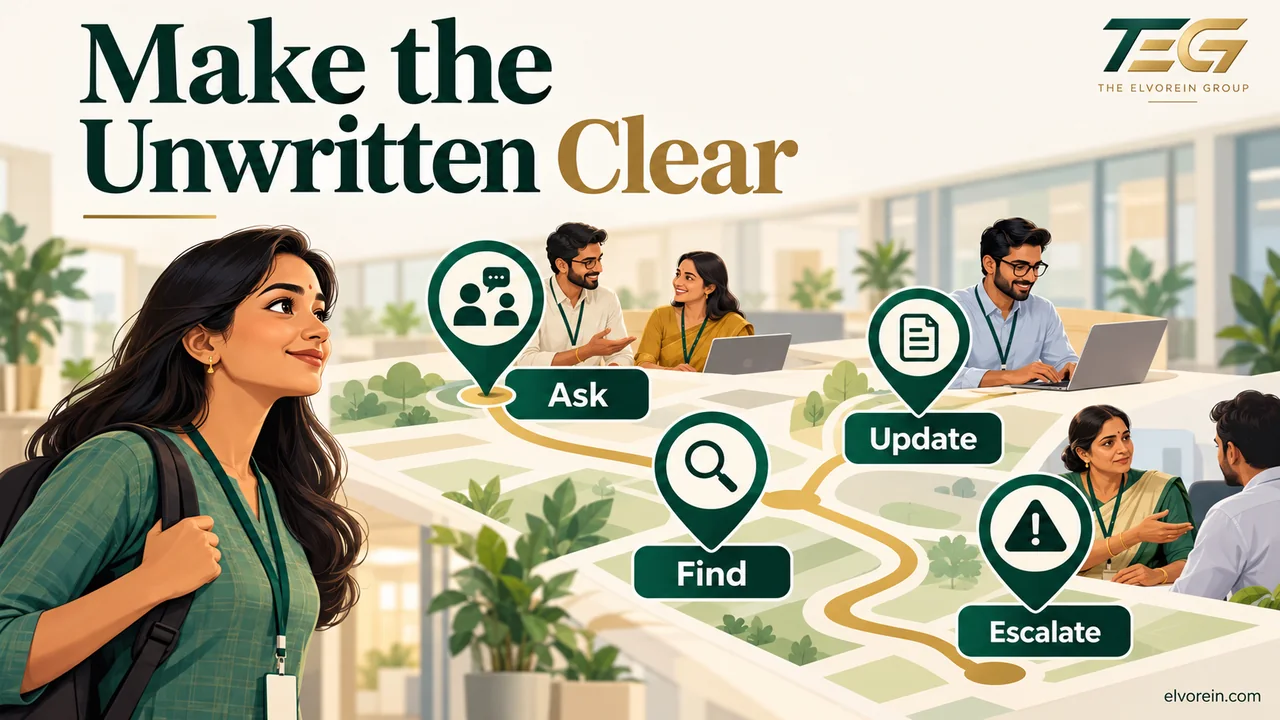
Make language choices deliberate
Odisha workplaces may use Odia, English and other languages for different purposes. Ask what participants need to understand and what the role requires them to produce. Avoid assuming that one language choice suits every task.
For internal learning, an explanation in Odia may help a participant understand a complex situation. For a client-facing role, practising a clear English update may also be necessary. Assess understanding and delivery separately so that support addresses the right gap.
Do not equate accent with competence or encourage employees to hide questions to appear fluent. Use relevant work samples and give specific feedback on clarity, completeness and audience needs.
Where translation is required, verify that important policy and process meanings remain accurate.
Check access to information and participation
Ask whether the employee can use the systems, documents and physical spaces needed for the role. Check the format and timing of information, rather than assuming that sending a link makes it accessible.
Discuss reasonable work-related support needs through appropriate organisational channels. Avoid asking managers to speculate about a person’s health or disability. The employee should know where to discuss a requirement privately.
For a multi-location organisation, check whether branch employees receive information at the same time as head office colleagues. A Berhampur joiner should not depend on an informal Bhubaneswar contact to discover a revised instruction.Organisations can strengthen inclusive onboarding in Odisha by ensuring that employees across different branches receive equal access to updated information, workplace resources and guidance.
Meeting access matters too. If important decisions occur only in an optional social gathering, employees who cannot attend may be disadvantaged in the actual work.
Use a buddy without making them the entire support system
A buddy can explain everyday navigation and make it easier to ask small questions. Define the role: helping the employee find information and understand routines, while the manager remains responsible for expectations and feedback.
Choose someone who can provide reliable guidance and knows when to refer a question. Do not expect a junior buddy to resolve a sensitive complaint or interpret policy beyond their role.
Schedule brief check-ins and ask the new joiner what remains unclear. Feed recurring questions back into induction so that the organisation learns rather than relying on each buddy to patch the same gaps.
The buddy arrangement should widen access to support. It should not create dependence on one person’s availability or personal interpretation.

Design early assignments as learning opportunities
Choose an initial task with clear boundaries, a visible standard and appropriate supervision. Explain what success looks like and when the employee should ask for help.
Review the work together. Ask how the person approached the task and what information they needed. Their reasoning can reveal capability that a polished introduction or informal conversation would miss.
If the result is weak, identify the cause. Was the instruction unclear, the system unfamiliar or the skill underdeveloped? Different causes require different responses. Provide another opportunity to apply feedback where appropriate.
This method connects inclusion with corporate training and HR strategy. It helps managers make development decisions using evidence from work.
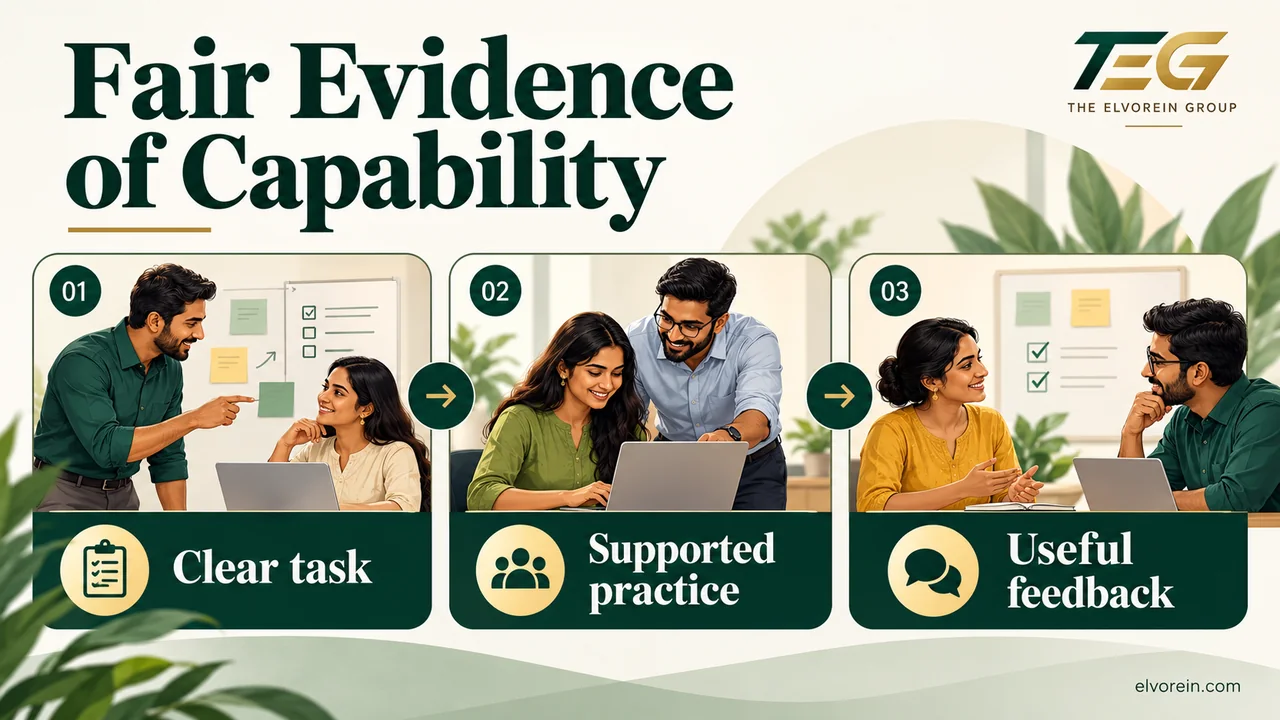
Review feedback and opportunity across the first months
Look at who receives coaching, meaningful assignments and useful explanations. A new joiner who receives only routine work may have little opportunity to demonstrate the skills used in a later assessment.
Ask managers to explain their decisions with role-related evidence. Where patterns differ across groups, investigate context and support before drawing conclusions. Collect only information needed for a defined purpose and handle small samples carefully.
Invite employee feedback about clarity, access and treatment. Provide a route that does not depend entirely on the direct manager, particularly where the employee’s concern involves that relationship.
The goal is a more reliable onboarding process, rather than a promise that every new employee will perform equally or stay indefinitely.
Start with one joining experience
Select a recent role and reconstruct the first month from the employee’s perspective. Review recruitment messages, induction, system access, manager conversations and initial assignments. Identify one gap the organisation can address immediately.
Test a revised approach with the next relevant joiner and ask what improved.Consistent inclusive onboarding in Odisha helps businesses build clearer processes, improve employee participation and create a more supportive working environment. Expand only after the routine is workable for managers and employees. This is an illustrative improvement method, not a fixed programme requirement.
The Elvorein Group’s Diversity & Inclusion service is relevant to bias awareness and inclusive communication. Organisations in Cuttack, Puri, Berhampur and Bhubaneswar can discuss their requirements and confirm programme scope and arrangements. The city references describe the intended audience, not additional Elvorein offices.
Inclusive onboarding: a practical review checklist
- Define the situation participants need to handle.
- Use a relevant, non-identifying work or learning example.
- Agree the behaviour or decision that should improve.
- Confirm who will support application afterwards.
- Review evidence and revise the next step.
Frequently asked questions
What is inclusive onboarding?
It is an approach that makes expectations, information and support usable for employees with different backgrounds and needs. It combines clear work standards with fair opportunities to learn and demonstrate capability. Inclusion does not remove the performance requirements of the role.
How should managers assess cultural fit?
Translate relevant values into observable behaviour, such as respectful collaboration or reliable follow-through. Avoid judging fit through social similarity or familiarity with office habits. Ask whether the person understands expectations and has had an opportunity to demonstrate them.
Should onboarding be conducted only in English?
Choose language according to understanding and job requirements. Internal explanations may benefit from Odia or another shared language, while particular work tasks may require English. Evaluate the task and provide support rather than using language as a proxy for overall ability.
Can a buddy replace regular manager check-ins?
No. A buddy can help with navigation and routine questions. The manager remains responsible for role expectations, feedback and work decisions. Sensitive or specialist matters should go through the appropriate organisational route rather than being delegated informally to the buddy.
How can HR identify onboarding bias without overinterpreting data?
Use consistent work criteria, review examples and ask how opportunities and support were allocated. Treat differences as a reason to investigate. Small samples and changing roles limit conclusions, so combine proportionate data with careful process review.
Related reading: Diversity and Inclusion Training: A Practical Bhubaneswar Guide.
