
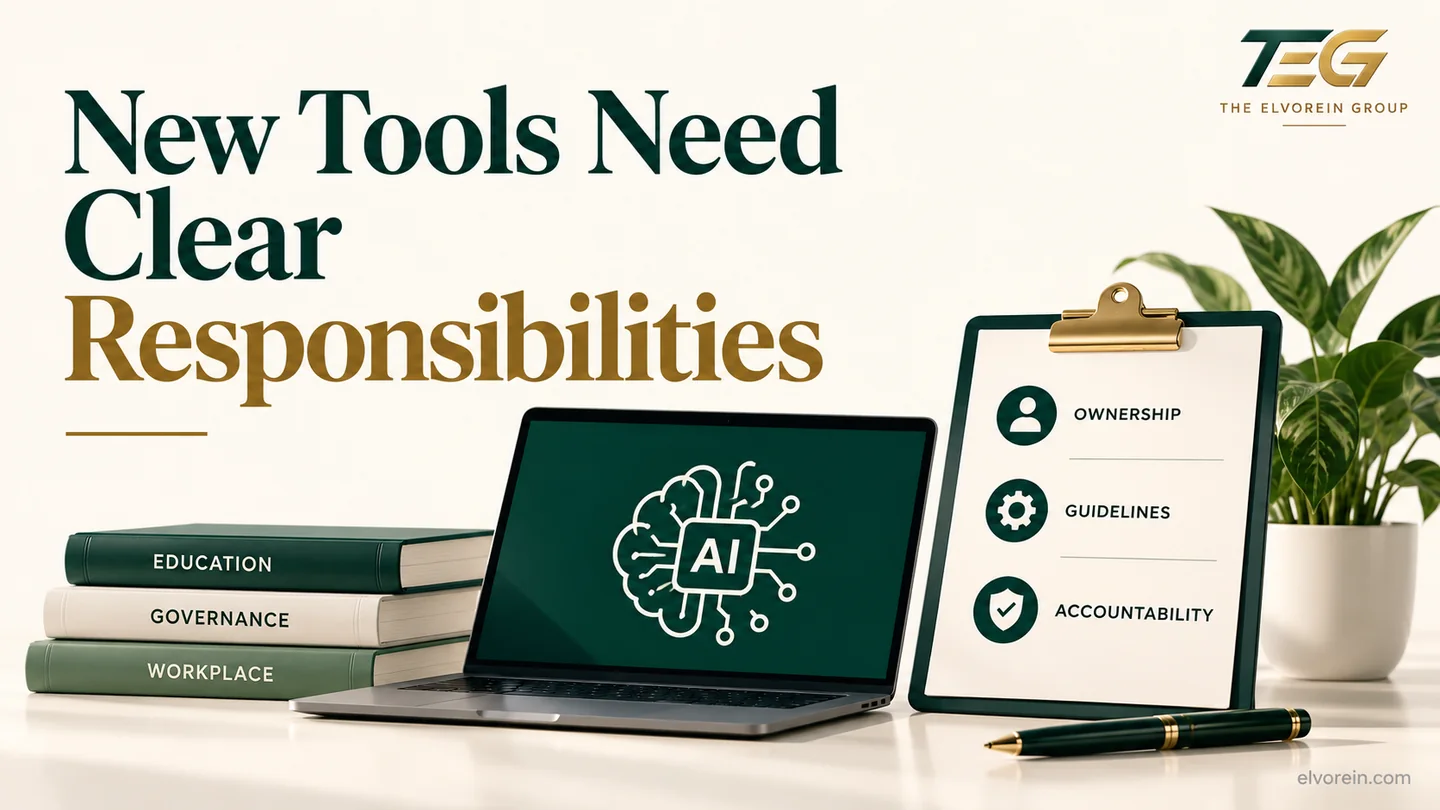
Organisational change management in Bhubaneswar should clarify how new ways of working affect responsibilities, decisions and team expectations. For AI-assisted work, leaders need to explain permitted use, human review and ownership of the final output. People development should complement technical and governance decisions, with managers supporting practice and feedback.Effective change management in Bhubaneswar helps organisations prepare employees for new technologies, clarify workplace responsibilities and build confidence during transitions.
Consider an illustrative services team in Bhubaneswar. Employees begin using approved AI tools to draft updates. One manager praises speed; another rejects any AI-assisted work; a third expects faster delivery but gives no review standard. The tool is available, yet the team does not share an operating agreement.
This is a people and process issue as well as a technology issue. A workshop on tool features cannot independently resolve contradictory manager expectations. Leaders need to decide what good work now looks like.
What the 2026 evidence says
Microsoft’s 2026 Work Trend Index, published on 5 May, draws on a survey of 20,000 AI-using workers across ten markets and Microsoft 365 signals. It associates organisational conditions, including culture and manager support, with reported AI impact. This is not proof of causation or a measurement of Odisha workplaces.
The editorial implication is to examine the environment around adoption. Employees need shared expectations and a way to discuss uncertainty. Training becomes more useful when leaders have addressed the decisions that only the organisation can make.A practical change management in Bhubaneswar strategy should therefore connect employee training with clear leadership decisions, communication and consistent workplace expectations.
For teams around Infocity, Patia or DLF Cybercity, these questions may provide a relevant discussion framework. They do not establish how any company in those locations currently uses AI.
AI workplace culture is shaped by what managers approve, question and reward during ordinary work. Treat organisational change as a shared operating discussion: explain what employees can use, what they must verify and who owns the final decision within the organisation’s approved boundaries.
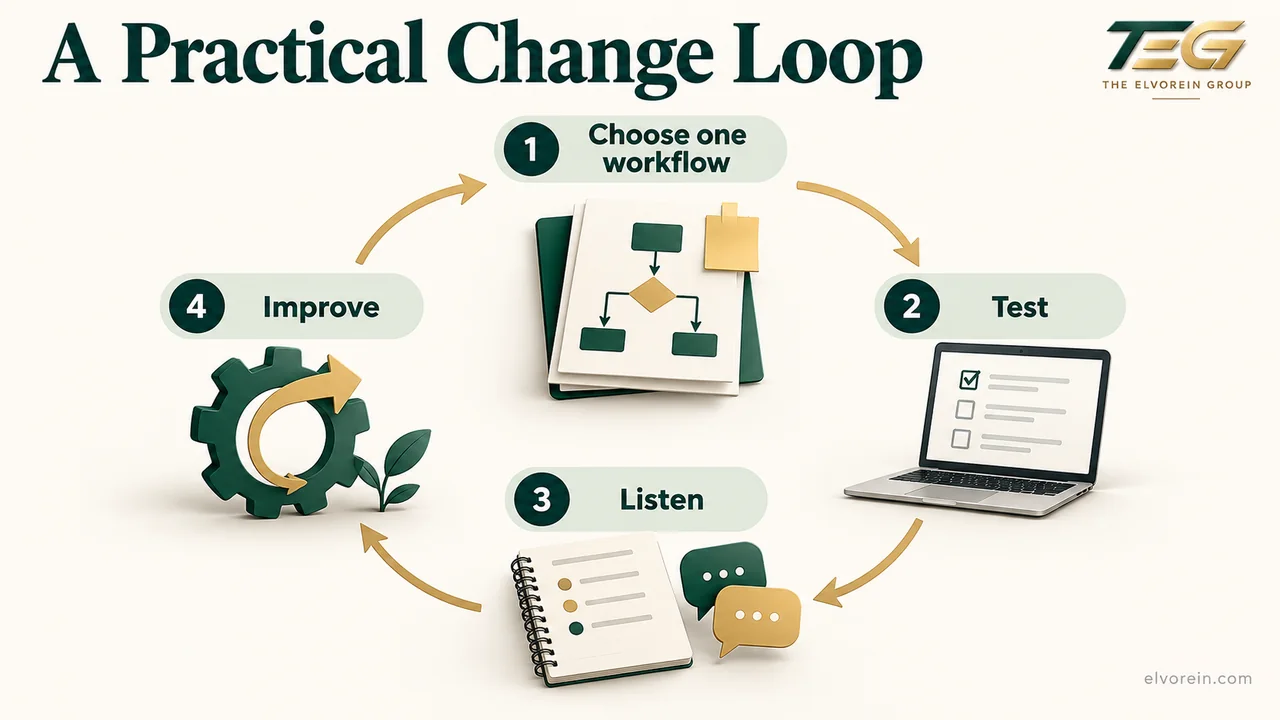
Start with one workflow rather than an abstract transformation
Choose a specific activity: drafting an internal update, summarising approved meeting notes or preparing a first version of a routine document. Select the workflow through the organisation’s technical, privacy and governance arrangements.
Map the current steps and identify what would change. Who supplies information? Who reviews the draft? Who decides whether it is ready? Who remains responsible if the content is incorrect?
Make assumptions visible. If a task previously involved learning through preparation, consider how employees will continue developing judgement when part of that preparation changes. Faster production does not automatically establish readiness for independent decision-making.
A focused workflow gives leaders something concrete to test and employees a clearer explanation of the change.
Agree the human responsibilities
Employees should understand which decisions remain theirs and where approval is required. “Use your judgement” is insufficient when the organisation has not explained the standard or the risk boundaries.
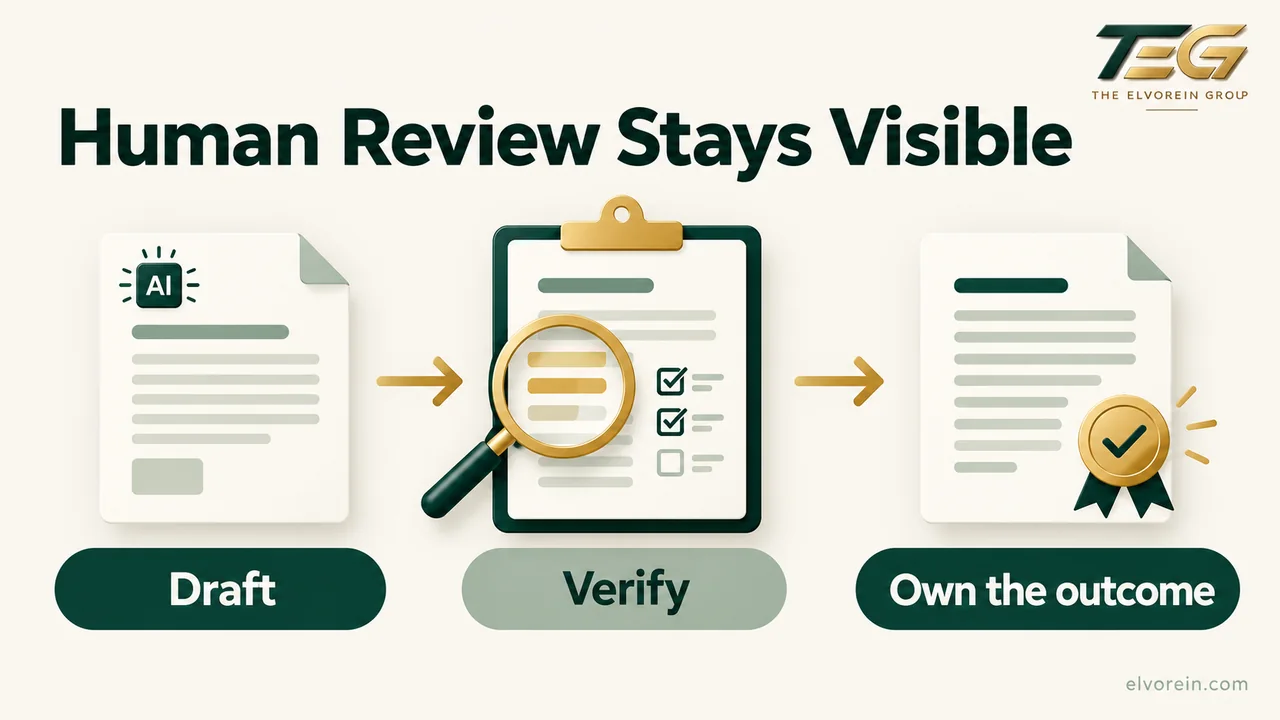
For an illustrative client update, responsibilities might include verifying facts against approved records, checking that the message matches the commitment and obtaining review for an exception. These are example work-design questions, not technical implementation instructions.
Ask employees to explain how they checked the output. A polished document can still contain an unsupported assumption. Managers should assess reasoning and ownership alongside speed.
Where a question concerns data protection, security, intellectual property or regulated work, use appropriate specialist review. A people-development provider should not be assumed to replace those functions.
Align managers before asking employees to change
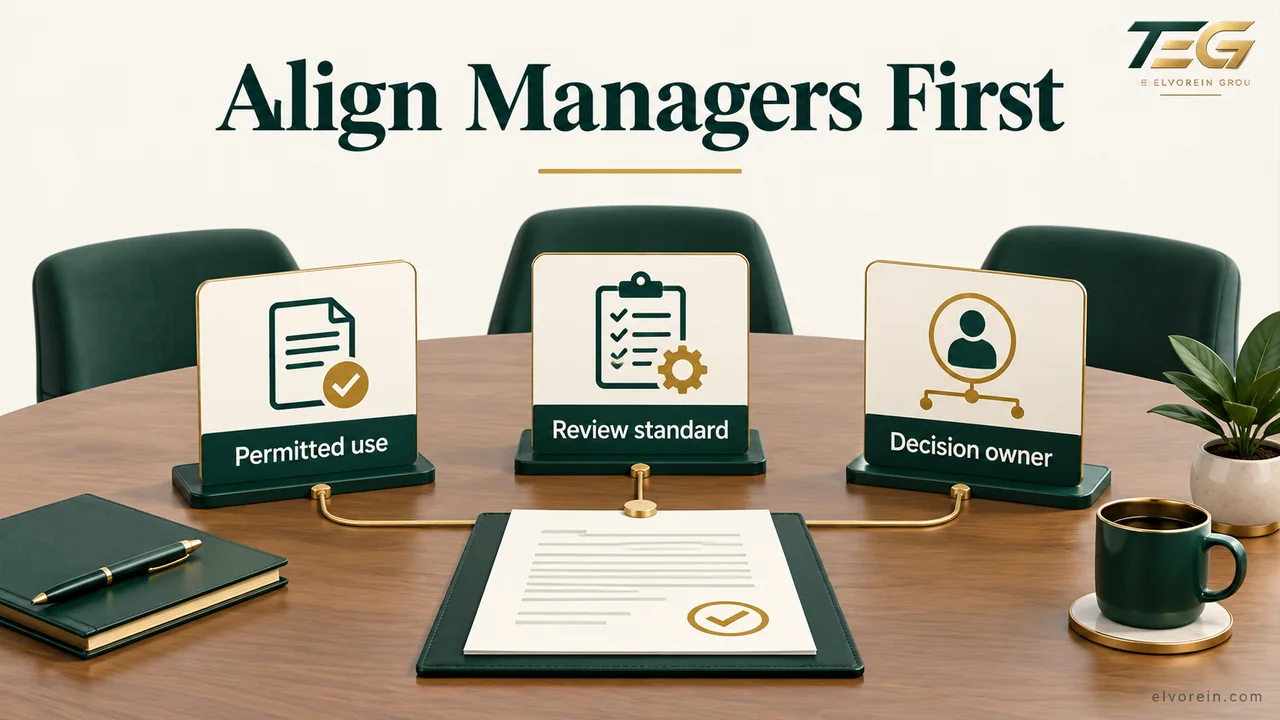
Hold a manager discussion about the purpose of the change, permitted practices and the standards used to assess work. Identify disagreements before employees receive competing messages.
Ask managers to work through the same example and compare their decisions. What would each accept? What would require correction? Where do they need further guidance? This exercise can reveal gaps hidden by broad statements of support.
Agree how managers will respond to a reported mistake or uncertainty. Employees need a route to raise concerns without guessing whether the manager will interpret the question as resistance.
Consistency does not mean every role uses the tool identically. It means differences are intentional, explained and connected to the work.Successful change management in Bhubaneswar requires managers to communicate consistent expectations while allowing flexibility for different team responsibilities and workflows.
Communicate what employees need to know now
A change announcement should explain the reason, the immediate effect on work, what remains undecided and where questions can go. Avoid presenting speculation about future roles as a settled outcome.
Use examples. Show how a task will be assigned, reviewed and approved under the new arrangement. Explain what employees should do when the tool produces something they cannot verify.
Invite questions in more than one format. Some employees will ask during a meeting; others may need time to consider the implications. Summarise recurring questions and publish approved answers in an accessible place.
This is particularly useful for teams spanning Bhubaneswar and Cuttack, where informal head-office conversations may otherwise become the main source of information.Clear communication is an essential part of change management in Bhubaneswar because employees need timely updates, practical guidance and opportunities to discuss workplace changes.
Practise judgement and constructive challenge
Use a fictional output containing an ambiguity or unsupported statement. Ask participants what they would check, what they would change and when they would seek help. The point is to explain a decision, rather than simply identify a mistake.
Managers can practise responding when an employee challenges an output or a deadline. Does the conversation reward careful review, or does it imply that speed is the only measure that matters?
Keep the activity within verified programme scope. Elvorein’s public organisational-development description supports communication, collaboration and change discussions. It does not establish technical AI deployment, cybersecurity consulting or product-specific certification services.
Any specialist learning requirement should be confirmed separately.
Create a feedback loop from actual use
During a pilot, gather work-focused observations: where instructions were unclear, which review steps were difficult and what caused unnecessary rework. Do not require employees to share restricted material in an open learning group.
Assign an owner to each issue. Some questions need a manager decision, others technical clarification or governance review. Communicate the answer back to the team so that learning does not remain with one individual.
Review whether incentives support the intended behaviour. If careful checking causes an employee to miss a speed target, the organisation needs to reconcile the conflict. Repeating the importance of judgement will have limited effect while rewards send another message.
Expand the approach only when the pilot provides enough evidence to make a reasoned decision.
Evaluate adoption and work quality together
Tool use alone is a narrow measure. Review whether employees understand responsibilities, can explain their checks and know the escalation route. Look at errors, review effort and rework in context.
Compare similar tasks and account for changes in complexity. A shorter completion time may hide more effort by the reviewer. A slower pilot may reflect learning rather than failure.
The Elvorein Group’s Organisational Development service is relevant to the communication and collaboration side of workplace change. Leaders can discuss a programme using a defined workflow, participant roles and approved boundaries. Where managers need additional practice, consider the related Leadership Development service.By combining employee development, leadership alignment and practical communication, change management in Bhubaneswar can help organisations introduce new working methods with greater clarity and accountability.
Change management in Bhubaneswar: a practical review checklist
- Define the situation participants need to handle.
- Use a relevant, non-identifying work or learning example.
- Agree the behaviour or decision that should improve.
- Confirm who will support application afterwards.
- Review evidence and revise the next step.
Frequently asked questions
Is AI adoption mainly a training problem?
Training can help, but adoption also involves work design, governance, technical access and management expectations. Diagnose the workflow before choosing an intervention. Employees cannot resolve contradictory policies or unclear authority through individual effort alone.
What should leaders clarify before an AI-related workplace workshop?
Clarify approved tools and uses, information-handling boundaries, review requirements and decision ownership through the relevant internal functions. Then identify the communication and judgement skills employees need to apply those arrangements in practice.
Does Elvorein provide technical AI implementation?
That capability is not established by the public service information used here. This article connects organisational development with communication and change. Confirm any technical, security or specialist training requirement separately before commissioning work.
How can managers assess AI-assisted work fairly?
Use role-related standards for accuracy, completeness and reasoning. Ask employees how they verified important claims and handled uncertainty. Consider the review effort and task complexity rather than treating tool use or speed as a complete measure of performance.
What is a sensible first change-management project?
Choose one approved, bounded workflow with a clear owner and review process. Test the communication and responsibility arrangements, collect feedback and revise them. The size and duration should reflect the organisation’s risk and operational context.
Related reading: Organisational Development in Odisha: Better Team Coordination.
