
Workplace wellness in Bhubaneswar works best when it connects employee wellbeing with everyday working conditions. An effective workplace wellness programme should combine stress awareness, workload management, role clarity, recovery time and manager support. For organisations planning workplace wellness in Bhubaneswar, the starting point should be understanding what creates avoidable pressure during an ordinary working week. Begin by asking what creates avoidable pressure during an ordinary working week. Choose learning activities and organisational actions together, then review whether employees experience a useful change.
Imagine an illustrative Bhubaneswar office that holds a wellness session on Friday afternoon. Employees discuss healthy boundaries and return on Monday to several competing deadlines, late task changes and an expectation of immediate replies at night. The session may have been useful, but daily work sends a different message.
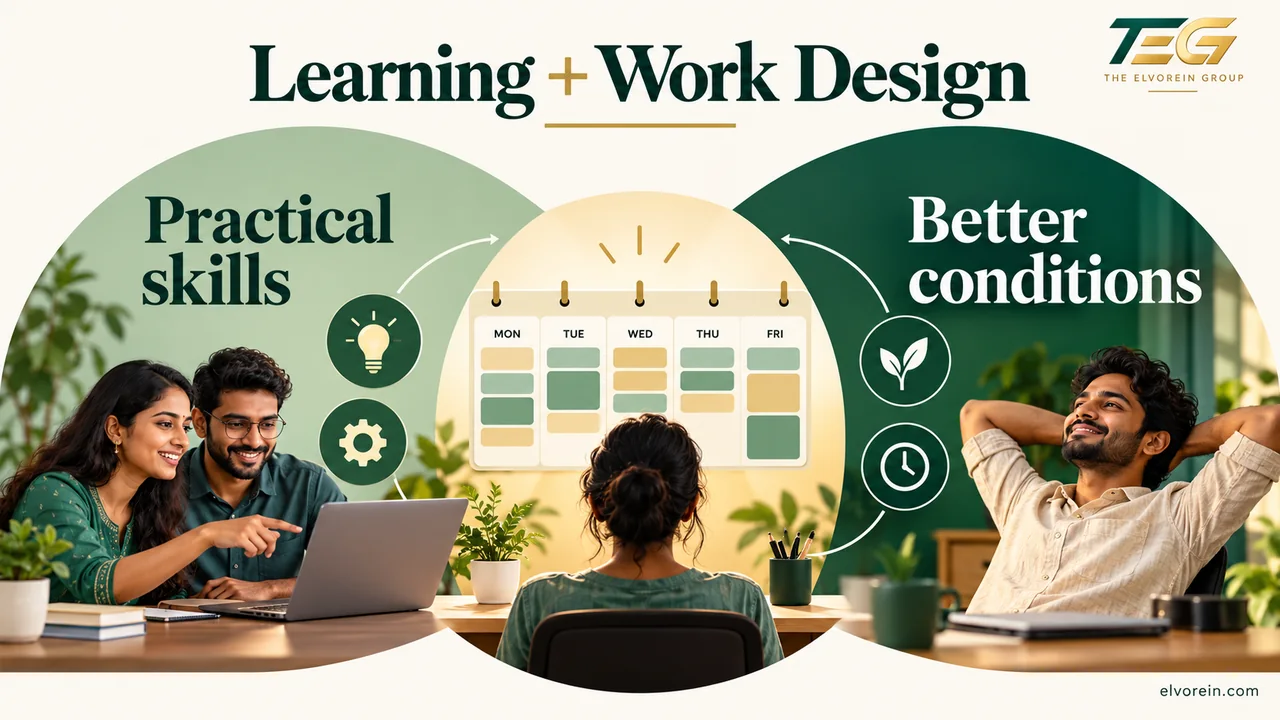
For an HR manager, this is a design problem. Employees need usable skills and a work environment where using them is possible. A credible wellness plan makes both responsibilities visible.A well-planned approach to workplace wellness in Bhubaneswar helps organisations address employee stress, improve communication and create healthier working conditions.
What current workplace guidance tells employers
The World Health Organization’s mental health at work guidance identifies working conditions, including excessive workloads and limited control, as relevant workplace risks. It discusses organisational interventions alongside manager and worker training.
The implication for a local employer is to investigate conditions before selecting activities. A breathing exercise, awareness discussion or resilience workshop may have a place, but should connect to a defined need. It should not become the organisation’s only response to an unmanageable work system.
This article addresses organisational planning and employee awareness. It does not diagnose employees or describe training as treatment. Individual health concerns require appropriately qualified support, outside the role of an ordinary workplace workshop.
Employee wellbeing planning should identify what employees can influence and what requires a management decision. Workplace stress management becomes more useful when awareness is accompanied by clearer priorities, practical support and a route for discussing demands that cannot all be met.
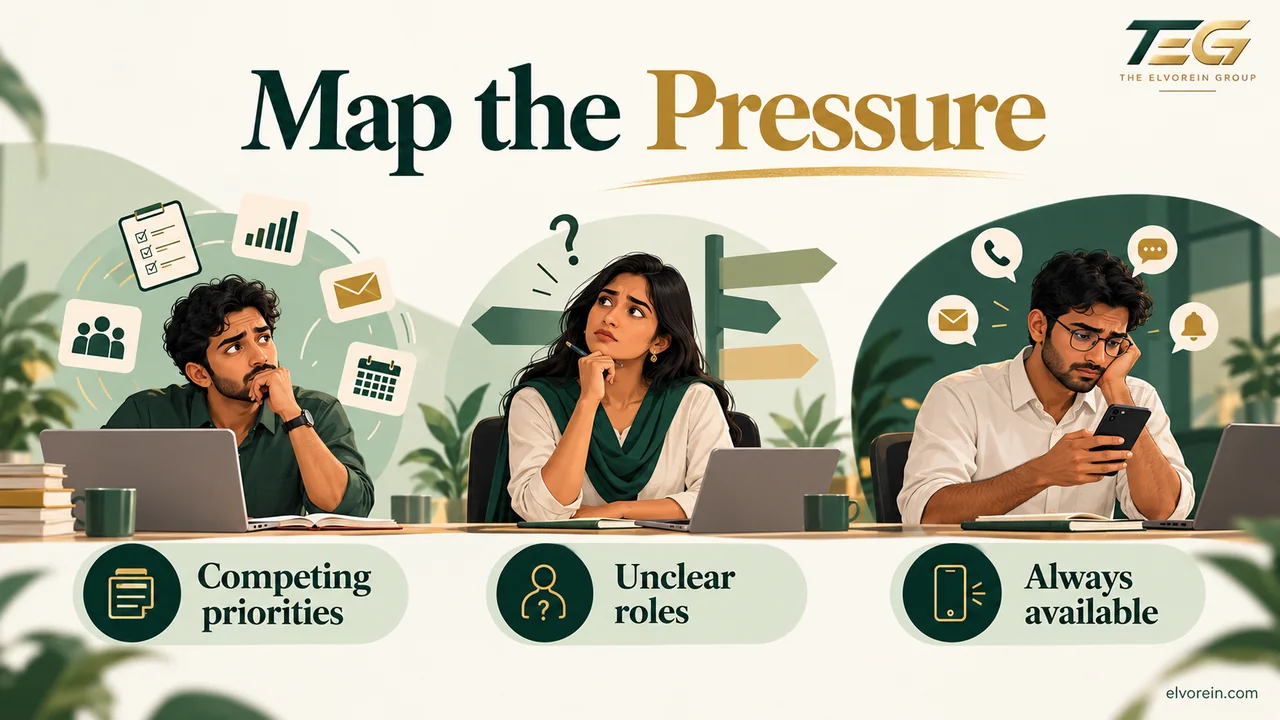
Map pressure through real work examples
Ask employees to describe a demanding week without requiring personal medical disclosures. What requests arrived? Which deadlines changed? Where did work wait for approval? When did they discover that a commitment was unrealistic?
Compare perspectives across roles. A senior manager may see a short urgent request, while the employee receives similar requests from several leaders. A coordination role may spend much of the day recovering information that should have arrived in a handover.
Use aggregated themes where possible. Explain who will see the information and how it will be used. A wellness survey loses credibility if employees believe individual responses will affect their performance assessment.
The output should be a practical pressure map: recurring sources of avoidable demand, roles affected and decisions the organisation can change.
Separate a busy period from a permanently overloaded system
Many organisations experience temporary peaks. A time-limited delivery period with clear priorities and recovery arrangements differs from a situation where every week requires exceptional effort.
Review planned work against available capacity. Ask what can be delayed, simplified, reassigned or stopped. Include time for coordination, learning and supervision instead of assuming every working hour is available for direct production.
For an illustrative team around Infocity, the issue may be overlapping project reviews. For a Nayapalli office, it may be one employee supporting several departments. These are possible situations, not findings about businesses in those locations.
A useful leadership discussion ends with a trade-off. Asking people to “manage time better” leaves the underlying decision unresolved when the assigned workload exceeds realistic capacity.
Give managers a supportive conversation they can use
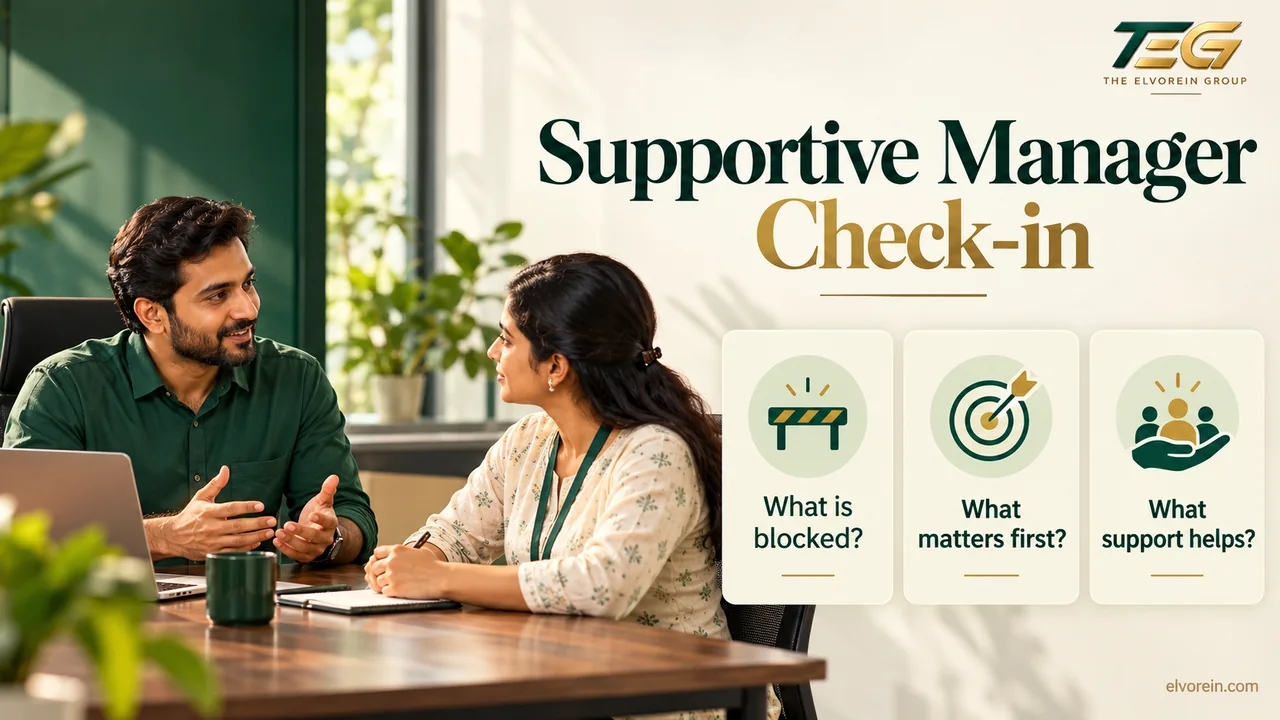
Managers should be able to ask about work pressure without demanding a personal explanation. A practical opening is to discuss current responsibilities, competing demands and what support would make the next week manageable.
Listen without promising confidentiality that the organisation cannot guarantee. Explain any relevant limits and follow established procedures when additional help is needed. Avoid making assumptions based on appearance, absence or a change in mood.
Practise the conversation with realistic constraints. An employee may not want to discuss personal matters. The manager can still address workload, clarify priorities and explain available support routes.
Training should also help managers recognise their own limits. They can support work arrangements and signpost appropriate services; they should not attempt to act as a clinician or counsellor without the relevant professional role.Workplace wellness in Bhubaneswar also depends on how effectively managers recognise workload challenges and support their teams.
Make boundaries operational
A statement about work-life balance needs a shared interpretation. Define which situations require an after-hours response, who is on duty and what employees should do with a routine message received outside working time.
Senior leaders should model the agreement. If they send late messages, they can state whether a reply is expected during the next working period. Teams handling genuine round-the-clock operations need appropriate coverage arrangements rather than an informal expectation that everyone remains available.
Discuss escalation for urgent work. An employee should know whom to contact when two deadlines conflict. The manager should know what authority they have to renegotiate a commitment.
These operational details make a wellness message more believable. They also connect the programme with leadership development and everyday management.
Choose awareness activities that support the diagnosis
If employees struggle to recognise early pressure signals, an awareness session can introduce reflection and practical discussion. If difficult interactions escalate quickly, guided practice in emotional awareness and constructive responses may be more relevant.
If the main issue is unclear task allocation, combine the learning with a process change. Explain what the business will do and what employees can practise. This prevents the session from suggesting that employees alone must adapt to avoidable pressure.Organisations investing in workplace wellness in Bhubaneswar should choose activities that address real employee needs rather than relying on generic training programmes.
Make participation accessible. Consider language, shift timing, room arrangements and whether employees can speak without their direct manager present. Avoid compulsory disclosure exercises or public sharing of sensitive experiences.
For groups around Fortune Towers or DLF Cybercity, logistics should follow actual participant locations and availability. Mentioning a business hub does not establish an office or service centre there.
Evaluate experience without invading privacy
Use short questions about work conditions and support: are priorities clear, can conflicts be raised, and do managers follow through on agreed actions? Aggregate responses carefully, particularly in small teams where people may be identifiable.
Track organisational actions as well as participation. Has the team clarified urgent communication? Has a recurring approval bottleneck changed? Are managers making time for workload discussions?
Do not require employees to reveal a diagnosis to demonstrate that a wellness programme mattered. Attendance and satisfaction can inform improvement, but neither proves a health outcome.
If absence or turnover changes, examine other influences before attributing the change to the programme. Responsible evaluation is specific about what was observed and modest about what caused it.
Build a manageable first phase
Start with one team or one recurring source of pressure. Hold a sponsor discussion, gather employee input and choose a practical organisational action alongside a learning priority. Review what happened after the team has had time to apply both.
This approach can be adapted for teams in Bhubaneswar and Cuttack, or organisations coordinating work in Puri and Berhampur. Delivery arrangements should be confirmed rather than assumed from the target locations.
The Elvorein Group’s Workplace Wellness service focuses on emotional awareness, resilience and constructive responses to pressure. Use a programme discussion to explain the working conditions, participant roles and support boundaries relevant to your team.Workplace wellness in Bhubaneswar becomes more effective when employee awareness, management support and practical workplace improvements work together.
Workplace wellness in Bhubaneswar: a practical review checklist
- Define the situation participants need to handle.
- Use a relevant, non-identifying work or learning example.
- Agree the behaviour or decision that should improve.
- Confirm who will support application afterwards.
- Review evidence and revise the next step.
Frequently asked questions
What should a workplace wellness programme include?
It should address identified employee needs, practical awareness and the organisational conditions affecting work. Depending on the diagnosis, this may involve manager conversations, clearer priorities, supportive communication and suitable learning activities. Scope should reflect the provider’s verified capabilities.
Can wellness training solve excessive workload?
Training can help people recognise pressure and communicate concerns, but leaders must address capacity, priorities and job design. If the workload is persistently unrealistic, the organisation needs an operational decision alongside any employee development activity.
Should employees disclose personal mental-health information during training?
They should not be required to disclose sensitive personal information as a condition of participation. Use scenarios and voluntary reflection. Explain how any feedback will be handled and provide appropriate routes for concerns that need individual support.
Is workplace wellness the same as counselling?
No. Awareness and skill development differ from individual clinical or counselling services. Confirm exactly what a provider offers. Managers should support work-related needs and use appropriate referral routes rather than attempt to provide treatment.
How can HR measure whether the programme is useful?
Review participation, understanding, manager follow-through and changes to identified work conditions. Use aggregated feedback and proportionate privacy safeguards. Avoid claiming a medical improvement or a direct reduction in turnover without suitable evidence.
Related reading: Employee Wellbeing for Shift Teams: A Practical Odisha Guide.
