

Campus-to-corporate training in Odisha should connect student preparation with the employer’s onboarding expectations. Colleges can help learners practise communication, feedback and professional behaviour; employers must explain role standards, provide supervision and support application. A first-90-days framework can organise that transition, but its timing and content should reflect the actual job.
Consider an illustrative graduate joining a Bhubaneswar office after studying in Berhampur. They have practised interviews and presentations, but are unsure when to ask for help, how to report a mistake or what level of independence the manager expects. The employer assumes these habits should already be established.
Both sides have a responsibility in the transition. Preparation can make the first conversations easier, while onboarding must explain the organisation’s particular work. Neither a college workshop nor a joining presentation can complete that process alone.
Define readiness as a starting point for development
The HirePro State of College Hiring in India 2026 report highlights differences between student and employer views of readiness. Its findings concern survey respondents, rather than a direct assessment of every graduate.
For HR teams, the practical response is to describe what the role requires at entry and what the organisation will teach. Some tasks may need immediate proficiency; others can develop through supervised practice.
A graduate who asks a basic question may be demonstrating appropriate caution rather than poor readiness. A confident graduate who makes an unsupported assumption may need more supervision than their presentation suggests.
Make the distinction through work evidence. This supports a fairer transition and more useful development conversations.
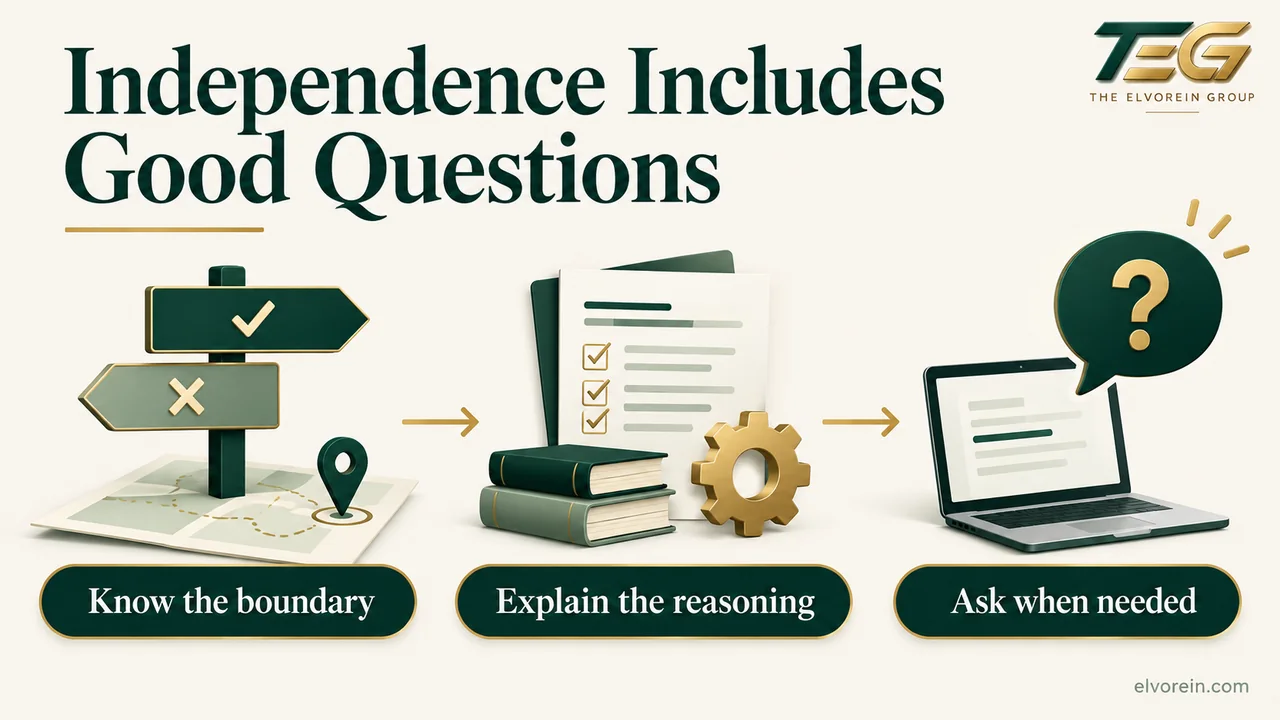
Graduate onboarding in Odisha should explain professional behaviour through the responsibilities of the actual role. Show new employees how to clarify a request, communicate uncertainty and ask for help within agreed boundaries, then review examples as their responsibilities gradually increase.
Before joining: align expectations without promising certainty
Colleges can introduce workplace situations involving unclear requests, changing deadlines and feedback. Students can practise asking questions, explaining their reasoning and producing a concise update.
Employers can provide accurate information about the role, joining arrangements and initial learning expectations. Avoid describing a development opportunity as guaranteed progression or implying that one programme prepares students for every employer.
Where a placement team collaborates with an employer, confirm what can be shared publicly. Geographic proximity to Infocity, DLF Cybercity or Fortune Towers does not create a recruitment relationship.
Use local references to explain the employment environment, while keeping preparation transferable. Students may join different sectors, cities and team structures from those used in the training examples.
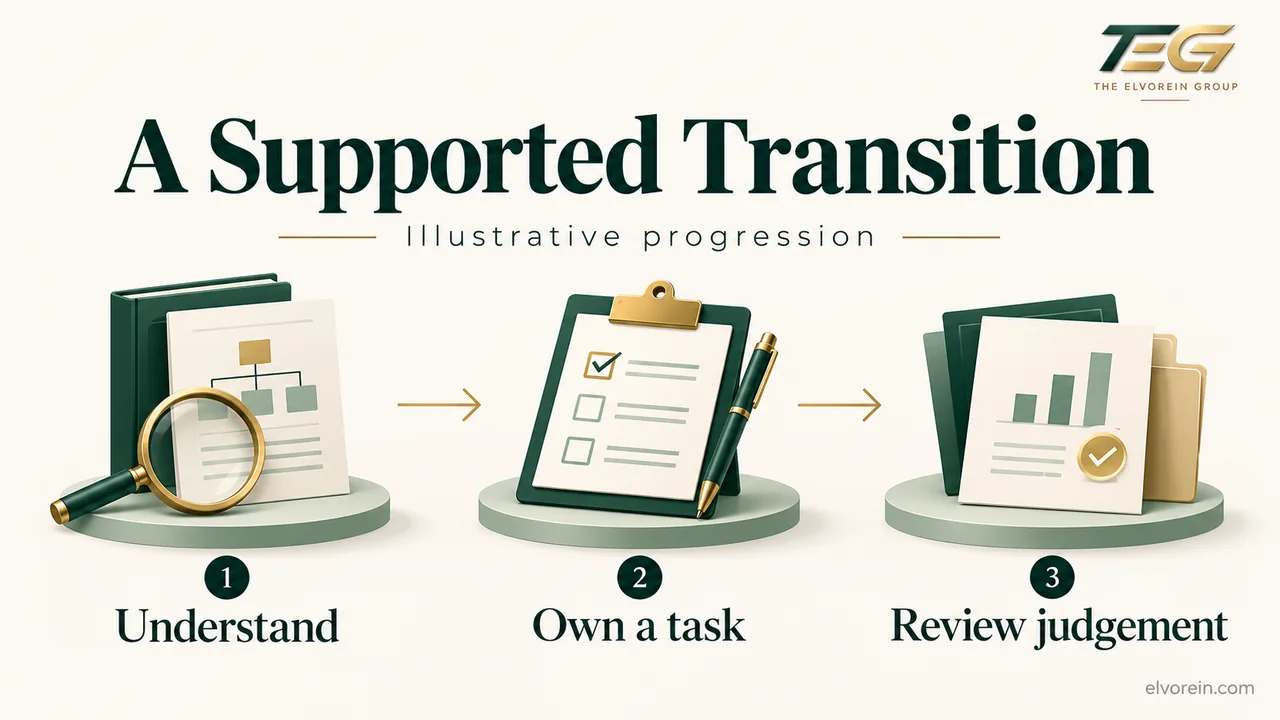
First month: make the work understandable
The first phase should establish the role, key contacts, approved information sources and escalation route. Explain how tasks are assigned and what a useful update contains.
Give the graduate a bounded assignment with a clear standard and a named reviewer. Ask them to explain their understanding before starting. This reveals ambiguity and provides a baseline for later feedback.
Schedule check-ins that are frequent enough for the task and the employee’s experience. A new joiner should not need to wait for a formal review to discover that their approach is wrong.
The month-based framework is illustrative. Some roles need a longer induction or additional specialist training before independent work. The employer should adapt the sequence to the responsibilities and risks involved.
Second phase: practise increasing ownership
As understanding develops, give the employee responsibility for a larger portion of the workflow. Explain what decisions they can make, when they should consult and what evidence they should retain in the work record.
Ask them to identify a likely obstacle before it becomes urgent. They might need information from another team or clarification of a customer requirement. The manager can coach the reasoning rather than immediately supply the answer.
Review both the result and the process. Did the employee communicate uncertainty, follow through on commitments and respond to feedback? An acceptable output produced through repeated hidden rescue may indicate a different support need from independent performance.
Use the review to plan the next assignment, rather than simply label the graduate as strong or weak.
Third phase: review judgement and collaboration
Once routine work becomes more familiar, introduce an appropriate variation. Ask the employee to explain how a changed condition affects the task and which decision requires approval.
Observe collaboration with colleagues. Can they provide a complete handover, ask a focused question and acknowledge a missed commitment? These behaviours help a team coordinate beyond the employee’s individual output.
Invite the graduate’s feedback about onboarding. Which instructions were unclear? Where did information conflict? What helped them learn? New employees can identify gaps that established colleagues have stopped noticing.
Do not treat the end of 90 days as a universal point of full competence. Use the review to agree current responsibilities and continuing development needs.
Prepare managers and buddies for different roles
The manager owns expectations, feedback and decisions about responsibility. A buddy can help the graduate navigate everyday routines and find information. Those roles should be clear to both people.
Give buddies a route for questions they cannot answer. They should not be expected to interpret sensitive policy, handle a complaint or make decisions reserved for the manager.
Managers need time to observe and coach. Adding several graduates to a team without accounting for supervision can create frustration on both sides. Review capacity before assuming the onboarding plan will run itself.
This connects with Leadership Development for supervisors and Corporate Training & HR Strategy for wider learning priorities.

Keep communication standards practical
Teach a repeatable update structure: the task, progress, obstacle, proposed action and decision needed. Adapt the level of detail to the recipient and the situation.
Use examples from the graduate’s actual role, with confidential information removed. Ask them to revise a vague update and explain why the new version is easier to use.
For teams working across Cuttack, Puri and Bhubaneswar, written clarity can reduce reliance on informal access to one person. For a Berhampur-based organisation, the same practice may help coordination within a single office.
Avoid assuming that young employees naturally understand digital professionalism. Work-related messaging, response expectations and information handling still need explicit explanation.
Evaluate progress without confusing it with hiring success
Use a small rubric covering task understanding, quality, communication, feedback application and appropriate independence. Record examples that support the assessment and discuss them with the employee.
Look at the support provided as well as the result. If the graduate never received a clear standard, the evaluation should acknowledge that gap. If the role changed, update the expectations rather than assessing against an outdated plan.
College leaders can use aggregated employer feedback to improve preparation, with appropriate permission and privacy safeguards. Avoid publishing individual employee assessments as programme marketing.
The Elvorein Group’s Pre-Placement Training service is relevant to preparing students for professional situations. Discuss your requirements and confirm any employer onboarding component separately. This article proposes a transition framework; it does not claim that Elvorein currently delivers a fixed 90-day programme or guarantees employment outcomes.
Campus-to-corporate training: a practical review checklist
- Define the situation participants need to handle.
- Use a relevant, non-identifying work or learning example.
- Agree the behaviour or decision that should improve.
- Confirm who will support application afterwards.
- Review evidence and revise the next step.
Frequently asked questions
What is campus-to-corporate training?
It prepares learners for professional situations such as clarifying tasks, communicating progress, receiving feedback and collaborating. It should connect with the roles students may enter. Employers still need to explain their own systems, standards and responsibilities during onboarding.
Is 90 days a standard training duration?
No. It is an illustrative planning window in this article. Actual timing depends on the job, prior experience and supervision requirements. A programme should not be described as an Elvorein 90-day offering without confirmation of scope.
Who is responsible for graduate readiness?
Students, institutions and employers each contribute. Students practise and apply learning; colleges provide preparation; employers define role expectations and support onboarding. Clear boundaries make the transition more useful than assuming one party can complete it alone.
How should HR assess a graduate’s independence?
Look at whether they understand the task, make decisions within agreed limits and seek help appropriately. Independence does not mean never asking questions. Review the quality of reasoning and the support still needed for the actual work.
Can colleges use employer feedback to improve training?
Yes, when the feedback is relevant, appropriately shared and handled with privacy safeguards. Look for recurring developmental themes rather than publicising individual assessments. Confirm any employer relationship before using its name in programme marketing.
Related reading: Pre-Placement Training in Odisha: First-Week Readiness.
